In the previous article, we established a critical point:
ETFs are not where investment decisions are made; they are instruments used to deploy capital.
This naturally leads to the next question:
👉 Where are those decisions actually formed?
The answer lies in Index Funds — the core foundation behind the rise of ETFs and the true center of modern, rules-based capital allocation.
Index Funds are investment vehicles designed to replicate the performance of a predefined index by strictly adhering to a fixed set of rules.
An ETF is simply the most widely used trading format of an Index Fund, allowing the fund to be bought and sold on an exchange like a listed security.
Put differently:
👉 ETFs are the trading shell.
👉 Index Funds are the capital allocation engine.
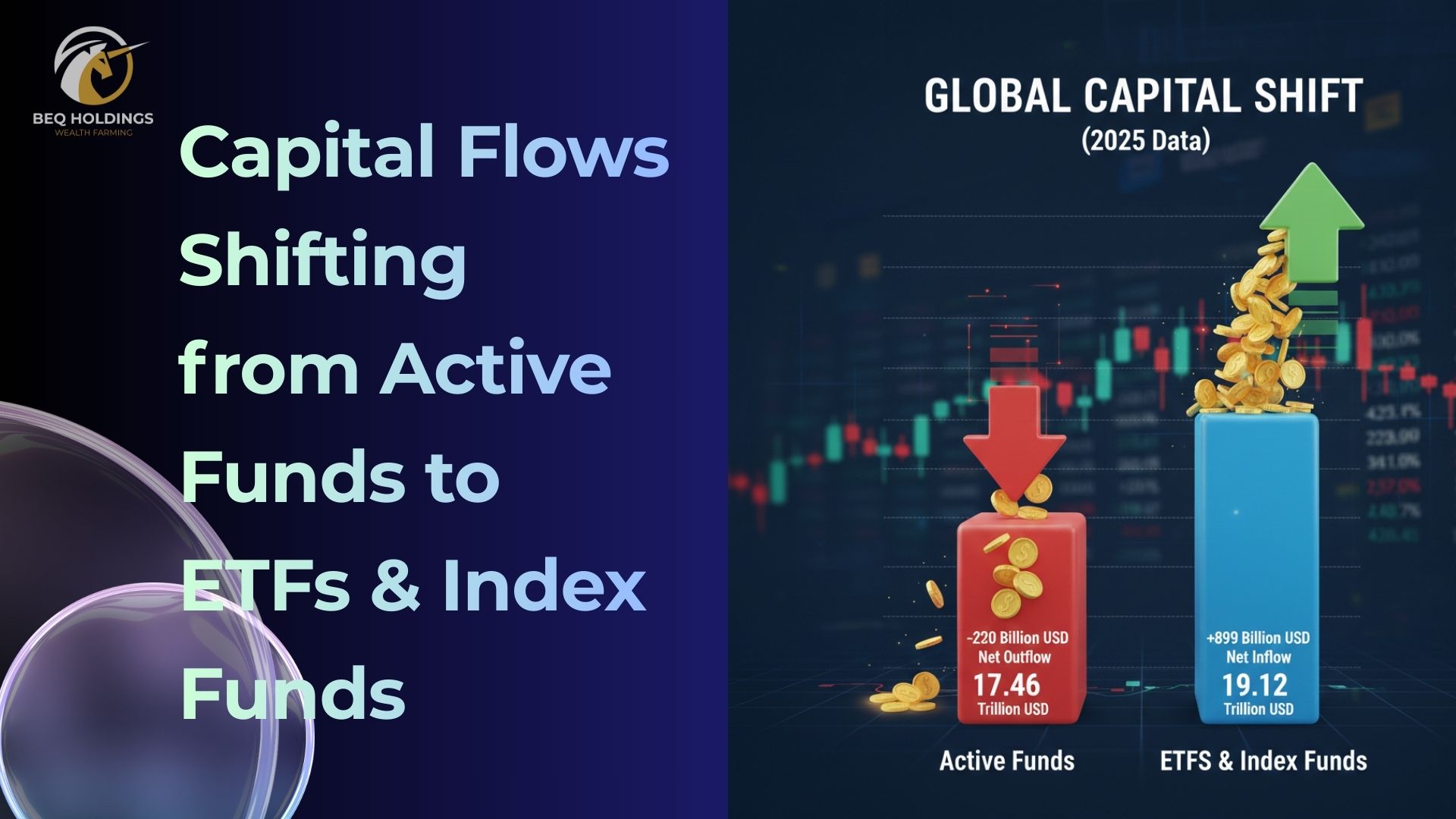
Industry data consistently show that the combined assets under management (AUM) of Index Funds and ETFs have surpassed those of active funds across many developed markets.
This does not signal the decline of analysis. Instead, it reflects a different structural reality:
Subjective analysis does not scale efficiently at very large asset sizes.
When an institution manages:
Then decisions driven by:
become systemic risks. Index Funds were created to address precisely this problem.
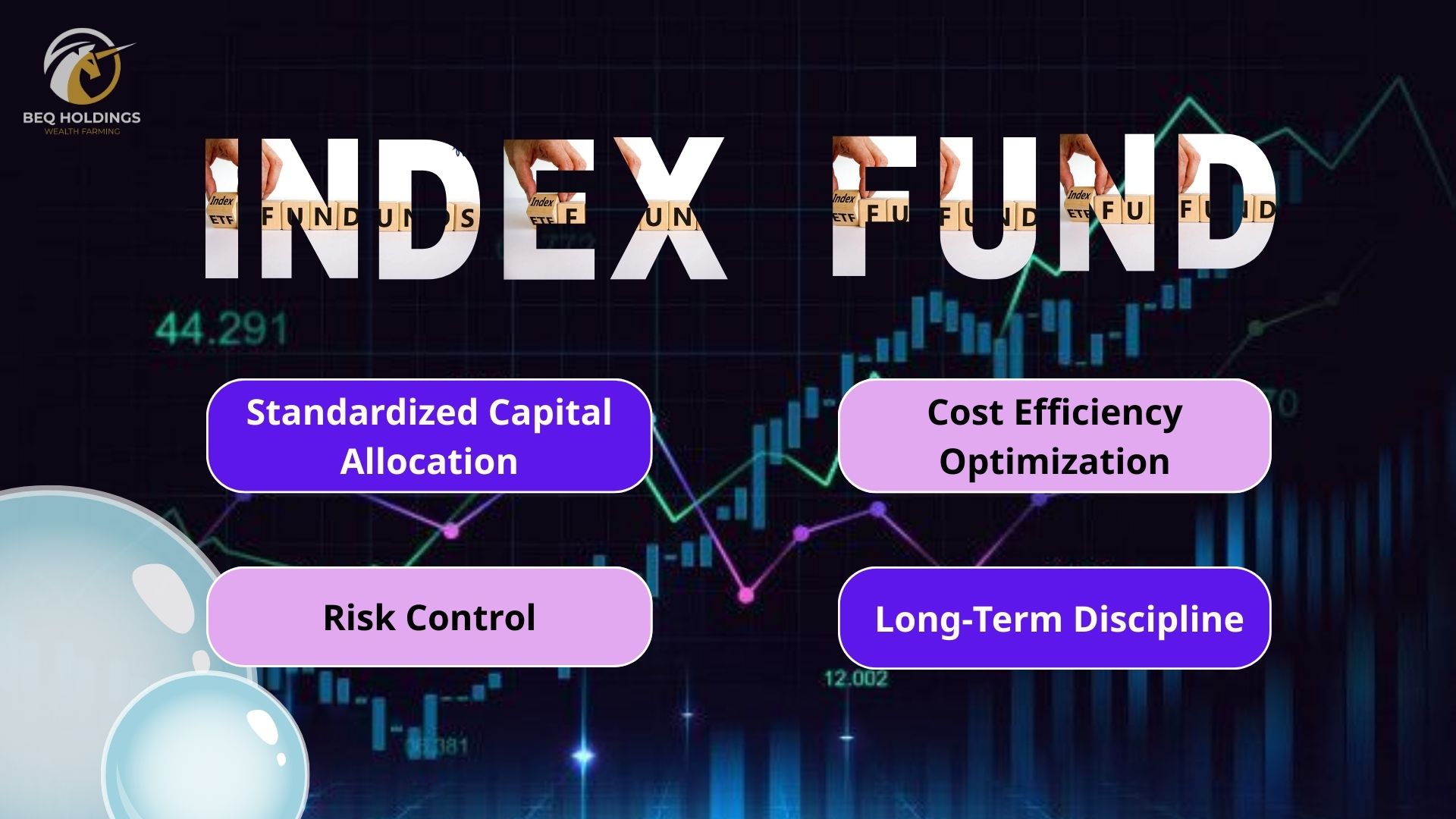
Index Funds do not attempt to “beat the market.” Instead, they operate on three foundational principles:
Index Funds accept the market as it is and focus on:
👉 This is a capital management mindset, not a short-term trading mindset.
Index Funds are not a new concept. They existed long before ETFs gained traction. However, it was the rise of ETFs that enabled index-based capital flows to scale globally.
ETFs provide Index Funds with advantages traditional mutual funds lack:
More importantly, ETFs allow index-level changes to be reflected in the market almost immediately.
This creates:
A common misconception is to treat ETFs as “smart money.”
In reality:
Because:
👉 ETFs always follow decisions made at the index level.
The most meaningful opportunities tend to arise before ETF activity, specifically:
This is where understanding indices matters more than simply “tracking ETFs.”
Vietnam’s expected reclassification by FTSE Russell from Frontier Market to Secondary Emerging Market — anticipated to take effect in September 2026 — is not merely positive macro news.
It represents a structural gateway for large-scale capital inflows from global Index Funds and passive investors.
According to market estimates:
This implies:
Index Funds do not operate on market opinions; they operate on index rules:
The issue is that most investors only see ETF trading activity, while Index Funds have finalized their decisions long beforehand.
CCPI does not track ETF buying or selling.
It tracks the indices that Index Funds are obligated to follow.
Specifically, CCPI focuses on:
👉 For Index Funds, the most important moment is not when ETFs trade,
but when index conditions change.
CCPI exists to help investors identify that moment.
If CCPI reveals where decisions are made, Dashboard Lite shows how those decisions are implemented in the market.
In the context of Index Funds:
Dashboard Lite enables investors to:
👉 This forms the linkage between:
Index (rules) → Index Fund (decisions) → ETF (implementation) → Market (prices)
Index Funds have explicitly chosen to:
Therefore, investors cannot rely on a “news-driven, price-guessing” mindset to understand index-based capital flows.
To stay ahead of Index Fund activity, investors must:
👉 CCPI addresses the decision layer.
👉 Dashboard Lite addresses the implementation layer.
This is why these tools sit above ETFs in the market’s operating hierarchy — not alongside them.
ETFs are the visible expression of capital flows.
Indices and Index Funds are where those flows are decided.
Investors truly understand the market when they:
In the next article, we will examine:
Contact BeQ Holdings for complimentary consultation
Hotline: +84 941 753 139
Email: contact@beqholdings.com
Text box item sample content