
Gen Z is entering financial markets at an unprecedented pace. Early access to technology, digital investment platforms, and continuous streams of financial information gives young people more opportunities than any generation before them. Time—the most valuable factor in investing—appears to be on their side.
However, in the context of emerging markets such as Vietnam, time only becomes a true advantage when it is paired with a sufficiently robust wealth management structure. Without it, early investing can easily turn into an experience of “moving fast but not going far,” where gains appear and then disappear across market cycles.
The reality in emerging markets shows that the issue is not that Gen Z invests too late, but that they often invest too early—before having a proper wealth management system in place.
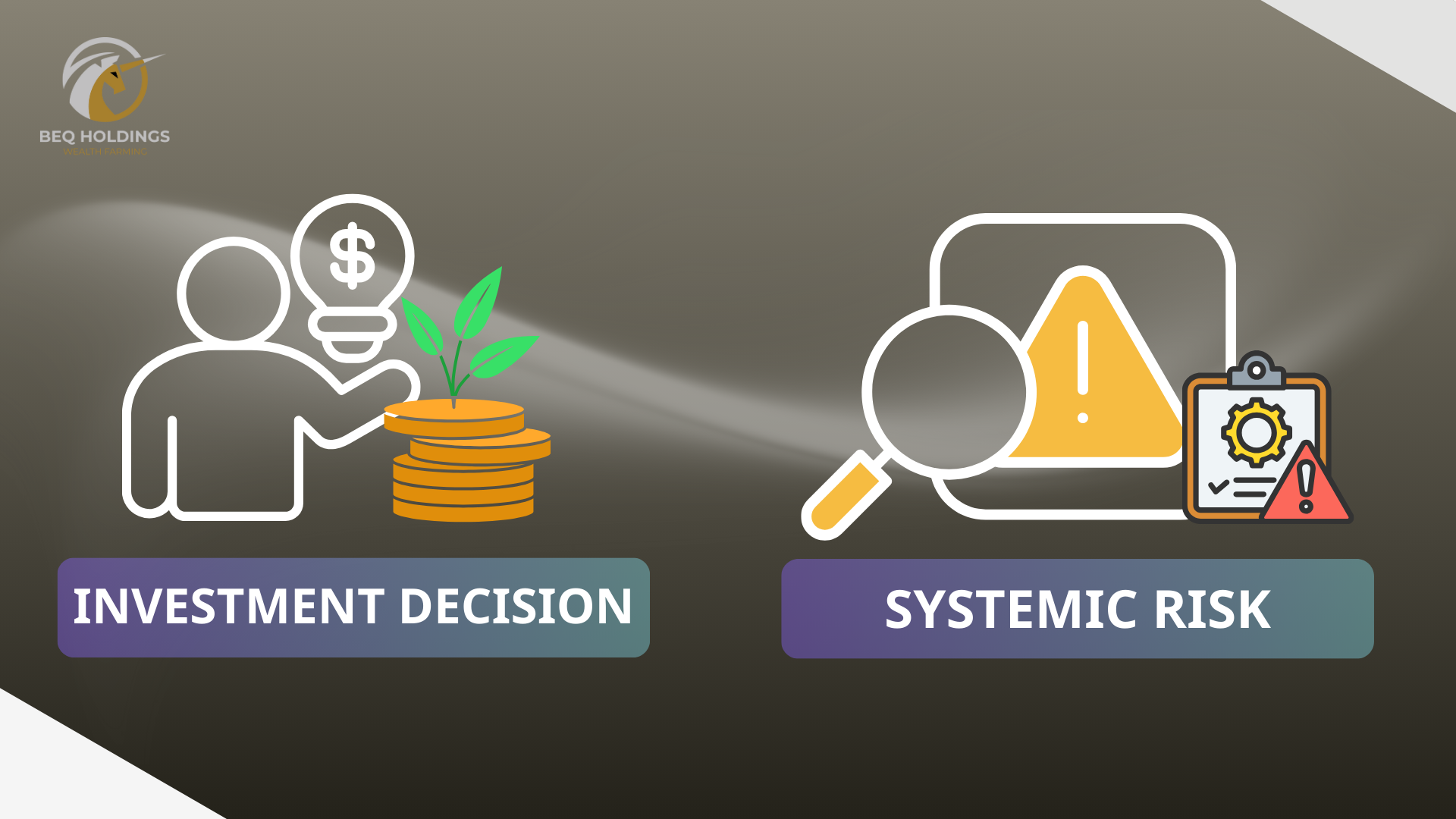
From a Wealth management perspective, going all-in is not a strategy—it is a signal of structural deficiency. When an entire portfolio depends on a single scenario, the investor is exposed not only to price volatility but also to behavioral vulnerability.
During periods of heightened market volatility—common in emerging markets—psychological pressure often builds faster than investors anticipate. Without protective layers within the portfolio, every market movement becomes a “make-or-break” event, forcing decisions driven by emotion rather than strategy.
Most major investment mistakes do not stem from choosing the wrong asset, but from having no room left to maneuver when market conditions reverse. Going all-in eliminates flexibility—the very element that is essential for long-term wealth management.
Asset allocation is not merely a technical exercise; it is a mechanism for controlling investment behavior. When a portfolio is divided into asset groups with distinct roles—growth, stability, and protection—the volatility of any single component no longer dictates an individual’s entire financial condition.
Particularly in emerging markets, where economic cycles are short and capital flows shift rapidly, asset allocation helps investors:
For Gen Z, the greatest advantage does not lie in “catching the right wave,” but in staying in the market long enough. A well-structured portfolio does not eliminate risk, but it ensures that risk is placed where it belongs—where it does not derail the entire wealth-building journey.
A common misconception is that asset allocation equates to safety at the expense of growth. In reality, wealth management is not about maximizing returns in any single period, but about optimizing the probability of achieving financial goals over the long term.
When a portfolio is constructed based on the relationships and correlations among asset classes, investors do not need to precisely time market peaks and troughs. The portfolio can still participate in favorable conditions while remaining resilient when conditions reverse.
More importantly, asset allocation protects one of the most overlooked factors in investing: psychological stability. Over the long run, discipline and the ability to stay committed to a strategy often produce superior outcomes compared to any short-term, all-in win that lacks sustainability.
One of the most common weaknesses among young investors is evaluating assets in isolation. Stocks are seen as stocks. Crypto is crypto. Cash is cash. This fragmented view makes it difficult to recognize systemic risk and the interconnections between decisions.
Wealth Management, however, requires a different perspective: A portfolio is a system, where each asset only has meaning when viewed within the whole.
This is also where technology and data must be applied correctly—not to make decisions faster, but to make decisions more structured.

Starting from this reality, BeQ Holdings developed platforms such as CCPI and Lumir to help investors approach Wealth Management in a structured and systematic way.
Rather than focusing on the question of “what to buy next,” these platforms enable investors to:
CCPI functions as a tool that reflects market conditions and momentum across different phases, while Lumir supports portfolio analysis and adjustment in line with long-term objectives and individual risk tolerance.
More importantly, these platforms do not replace investor decision-making. Instead, they reshape how investors think about their portfolios—shifting from intuition to structure, and from short-term reactions to long-term strategy.
In a fast-growing market like Vietnam, investment opportunities are always present. However, opportunities only create real value when they are placed within a robust wealth management framework. For Gen Z, investing early is a significant advantage thanks to the power of time. Yet in the context of a volatile emerging market, time only becomes an advantage when supported by a disciplined and adaptable financial structure.
The first foundation is asset allocation thinking rather than simply chasing high returns. When each portion of capital is clearly assigned a role—protection, growth, or higher-risk exposure—the portfolio no longer depends on a single opportunity or market cycle. This helps young investors maintain stability and reduce psychological pressure during periods of volatility.
Portfolio discipline is equally critical. In emerging markets, where sentiment and capital flows shift rapidly, adherence to strategy and risk management often matters more than short-term forecasting. Many major mistakes do not result from a lack of information, but from breaking discipline when markets reverse.
Sustainable wealth does not begin with choosing a “hot” asset. It begins with building the right portfolio structure from the start. When the foundation is properly set, growth becomes a natural outcome—not a gamble.
Contact BeQ Holdings for a complimentary consultation
Text box item sample content