
Emerging markets are a key driver of global economic growth, characterized by rapid development and the fast expansion of the middle class. A clear understanding of the characteristics, roles, and risks of this group of markets enables investors and businesses to formulate effective long-term strategies.
For several decades, global economic growth was driven primarily by developed economies in North America, Europe, and Japan. However, as these economies have gradually entered a phase of saturation – marked by slower growth, aging populations, and rising costs – the center of global economic growth is clearly shifting toward emerging markets.
Today, emerging markets are no longer the “periphery” of the global economy. On the contrary, they account for a significant share of global GDP growth, have given rise to the largest middle-class population in human history, and are increasingly emerging as new centers of production, consumption, and innovation in the global economy. Therefore, for businesses, investors, and wealth management institutions, correctly understanding and effectively engaging with emerging markets is no longer an option but a strategic imperative.
Emerging markets refer to countries or economies that are undergoing a strong transition from low- or middle-income development models toward modern economies that are deeply integrated into the global market.
This transition is typically reflected in rapid industrialization, a significant expansion of international trade, strong inflows of foreign direct investment, the increasingly sophisticated development of financial markets, and continuous improvements in income levels and living standards.
When placed on the “development ladder,” economies are commonly classified into three categories:
Emerging markets occupy an intermediate position but possess the strongest growth momentum.
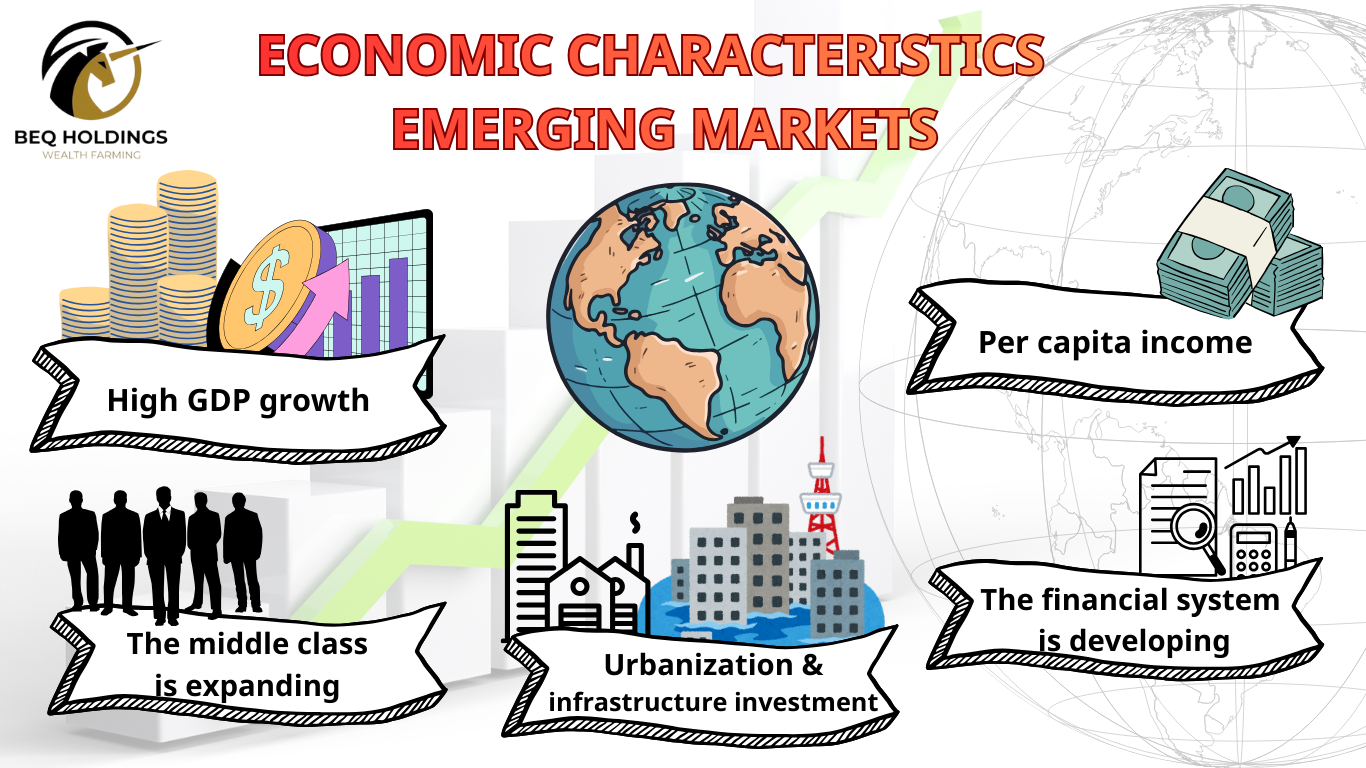
One of the most prominent characteristics of emerging markets is that their GDP growth rates are often higher than the global average, particularly when compared with developed economies that are entering a phase of slower and more mature growth. This growth momentum is driven by multiple factors, including rapid industrialization, the expansion of domestic consumption, increased infrastructure investment, and inflows of foreign capital.
However, high growth is accompanied by greater volatility across economic cycles. Emerging markets tend to be more sensitive to:
In addition, growth in emerging markets depends heavily on the effectiveness of internal reforms, including institutional reforms, the investment environment, financial system development, and macroeconomic governance capacity. In a highly volatile global economic environment, countries that implement reforms effectively tend to maintain more stable growth, while those with slower reform progress may face short-term growth slowdown risks.
Therefore, high but uneven and volatile growth represents a structural characteristic of emerging markets. This feature makes them both attractive in terms of growth potential and demanding in terms of a cautious approach and long-term vision from investors and businesses.
Although per capita income levels in emerging markets remain significantly lower than those in developed economies, the key distinction lies in the speed and consistency of income growth over the long term. Industrialization, the expansion of the service sector, and rising employment in higher value-added industries have significantly improved living standards over time.
Rising incomes not only carry economic significance but also drive substantial shifts in consumer behavior. Consumers in emerging markets gradually expand spending beyond basic needs toward areas such as education, healthcare, housing, technology, travel, and financial services. This shift forms the foundation for rapid growth in domestic consumer markets and fuels increasing demand for financial products, insurance, and wealth management services.
According to analyses from emerging market research, income growth that outpaces population growth is one of the key factors enabling emerging economies to sustain medium- and long-term economic expansion.
The rapid expansion of the middle class is widely regarded as the most important growth driver of emerging markets in the current period. As incomes rise and living standards improve, an increasing number of households move into the middle-income segment—a group characterized by stable spending capacity and long-term consumption expectations.
The middle class plays a critical role in three key aspects:
According to various analyses, demand from the middle class has become a key factor enabling many emerging markets to sustain growth even during periods of global economic slowdown. This is also why multinational corporations are increasingly focusing their long-term strategies on this group of markets.
Another prominent characteristic of emerging markets is rapid urbanization, as large-scale population movements shift from rural areas to urban centers. This process not only transforms demographic structures but also generates massive demand for urban infrastructure and services.
Urbanization leads to:
Analyses of emerging markets indicate that infrastructure investment not only stimulates short-term economic growth but also lays the groundwork for productivity improvements, investment attraction, and sustainable long-term economic development. This is why infrastructure is consistently regarded as a strategic pillar of emerging economies.
Emerging markets typically possess financial systems that are developing rapidly, characterized by the simultaneous expansion of:
This development enables emerging economies to:
However, compared with developed markets, the levels of transparency, stability, and market depth in emerging market financial systems are still evolving. Challenges related to legal frameworks, governance standards, risk management, and resilience to global shocks remain long-term concerns.
This dual nature makes emerging markets both highly attractive in terms of growth potential and demanding in terms of cautious approaches and well-structured risk management strategies from investors and financial institutions.
According to international economic analyses, the strong growth momentum of emerging markets has helped offset the slowdown of many developed economies during periods of global economic volatility. These markets contribute not only quantitatively to global GDP growth but also play a crucial role in generating new growth drivers through domestic consumption, infrastructure investment, and innovation in production models.
In the long term, as per capita income and labor productivity continue to improve, emerging markets are expected to maintain their position as a central pillar of global economic growth for decades to come.
Emerging markets are increasingly becoming strategic destinations for international capital flows, including both foreign direct investment (FDI) and financial capital. This attractiveness stems from several structural factors:
For financial investors, emerging markets offer access to higher long-term returns, particularly when appropriately allocated within a global investment portfolio. Meanwhile, for multinational corporations, these markets provide a powerful combination of production, consumption, and market expansion, creating sustainable competitive advantages.
One of the most notable trends in recent years has been the relocation and restructuring of global supply chains, with emerging markets playing a central role. In response to geopolitical risks, rising production costs, and supply chain disruptions, many companies have increasingly:
Thanks to advantages in labor availability, improving infrastructure, and investment attractive policies, from manufacturing and logistics to final consumption. This transformation not only accelerates economic growth in emerging economies but also reshapes the long-term functioning of the global economy.

Emerging markets offer a wide range of attractive investment opportunities, particularly for investors with a long-term perspective. Due to high economic growth rates and substantial development headroom, these markets often provide superior long-term return potential compared to many developed markets.
In addition, allocating capital to emerging markets enhances global portfolio diversification, reducing dependence on any single region or economic cycle..
More importantly, emerging markets enable investors to gain early exposure to new growth trends – from domestic consumption and technology to infrastructure development and the digital economy – thereby increasing the potential for sustainable long-term value creation.
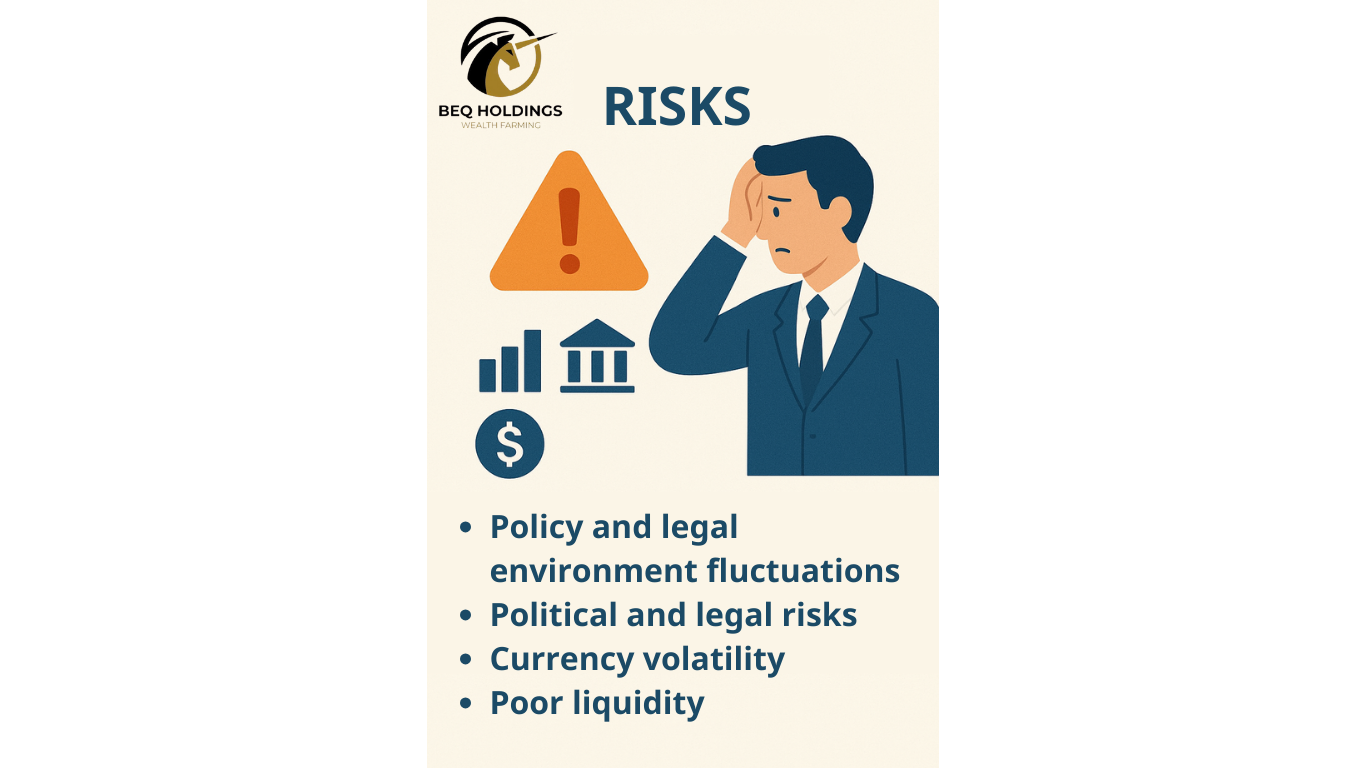
Alongside their high growth potential, emerging markets also come with structural risks that investors need to clearly recognize.
Policy volatility and an evolving regulatory environment are common characteristics, as countries undergoing reform frequently adjust regulations to adapt to growth, which can affect investment and business activities.
Political and legal risks are also important factors to consider, as they can directly impact capital flows, market confidence, and long-term prospects.
In addition, currency volatility in emerging markets is typically higher than in developed economies, which can affect investment returns when converted into major currencies.
Finally, financial market liquidity remains relatively limited, making divestment or short-term portfolio adjustments more challenging..
Therefore, investing in emerging markets requires a disciplined risk management strategy, appropriate asset allocation, and a long-term perspective, rather than short-term thinking or trend-chasing.

The rise of emerging markets offers superior growth potential, while simultaneously imposing higher demands on data analytics capabilities, risk management, and the design of long-term investment strategies. In this context, BeQ Holdings’ products and solutions are developed to directly address the core characteristics of Emerging Markets: high growth – high volatility – and structural differences across markets.
As analyzed, emerging markets are not homogeneous and are strongly influenced by economic cycles, capital flows, and policy dynamics. Therefore, investment decisions cannot rely solely on traditional indicators or market sentiment.
BeQ Holdings’ Cloud Computing Platforms (CCPR, CCPI, CCPS) are designed to: (https://dashboardlite.ccpi.vn/login)
Through this data infrastructure and quantitative analytics framework, investors and enterprises can gain a clearer understanding of the true nature of growth in each emerging market, rather than approaching them from a one-dimensional or short-term perspective.
Built on this data foundation and analytical system, Lumir is developed as a decision support and risk management platform, particularly suited to the volatility inherent in Emerging Markets.
Lumir enables users to: (https://lumir.finance/accounts-overview)
Unlike short-term trading tools, Lumir is positioned as a platform that supports systematic investment thinking, helping investors to:
In the context of Emerging Markets, Lumir serves as a “bridge” connecting data, analysis, and investment decision-making.
One of the major challenges in emerging markets is accurately measuring performance and risk. BeQ Holdings develops a diversified system of indexes that more closely reflect market realities, including:
When integrated and utilized through Lumir, these indexes allow investors to:
Opportunities in emerging markets become truly sustainable only when paired with long-term investment thinking and proactive risk management. BeQ Holdings’ strategic solutions focus on:
Throughout this process, Lumir plays a supporting role in monitoring and adjusting strategies, helping investors stay aligned with long-term wealth objectives amid market volatility.
For enterprises operating in or targeting emerging markets, BeQ Holdings provides services including:
These solutions are particularly relevant in the context of rapid urbanization, infrastructure investment, and global supply chain restructuring, where companies in Emerging Markets face significant expansion opportunities alongside increasing governance and management pressures.
Conclusion
Emerging markets are the engine of global growth – but only the right strategies create long-term value.
With its ecosystem of data, indexes, the Lumir platform, and strategic solutions, BeQ Holdings enables investors and enterprises to approach Emerging Markets in a structured, transparent, and sustainable manner.
Ready to approach Emerging Markets in a structured and sustainable way?
Connect with BeQ Holdings to build investment and growth strategies driven by data, proactive risk management, and a long-term vision.
👉 Contact BeQ Holdings
Text box item sample content