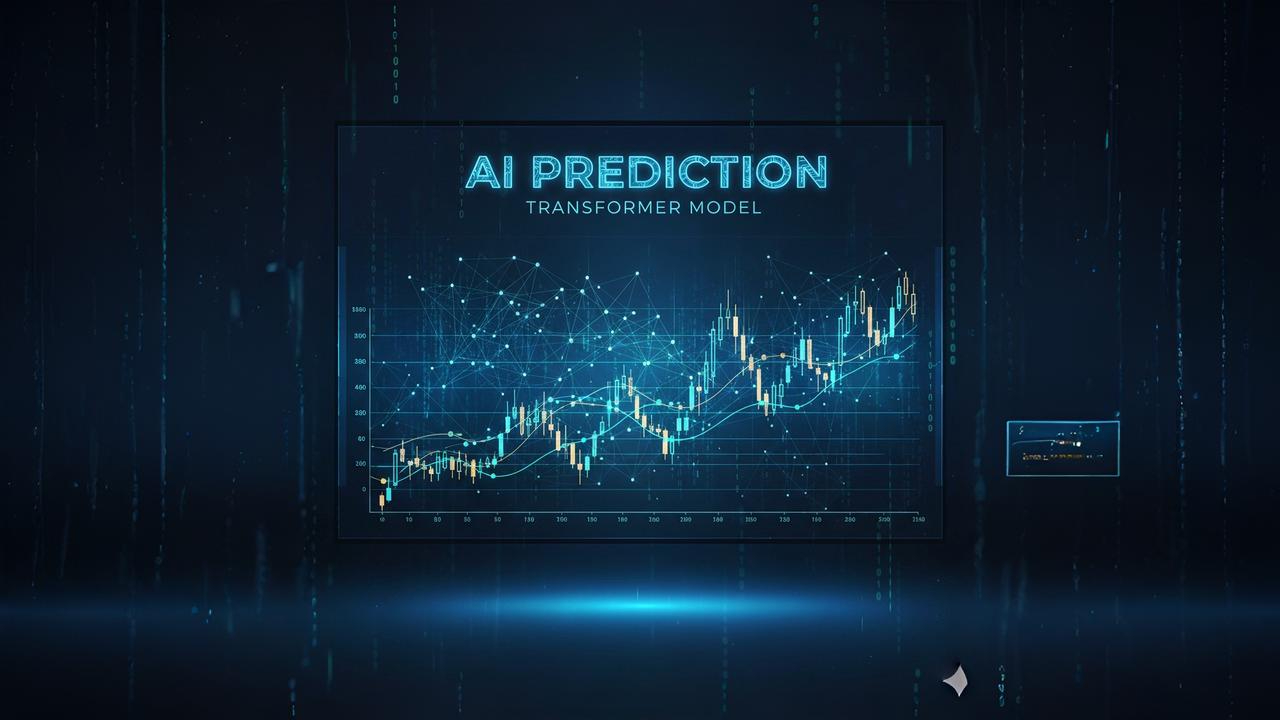
Introduced in 2017 by Vaswani et al. in the seminal paper “Attention Is All You Need”, Transformers have become the backbone of today’s most powerful AI systems—from language models like GPT to vision transformers powering image recognition.
A Transformer is a deep learning architecture designed to process sequential data without relying on recurrence (like RNNs or LSTMs). Instead, it uses attention mechanisms to capture relationships between elements in a sequence, regardless of their distance. This ability to model global context efficiently makes Transformers ideal for tasks involving language, time series, and even multimodal data.
Transformers aren’t just for text—they excel at time series forecasting too. Here’s a simplified example using a Temporal Fusion Transformer for predicting stock prices:
# Pseudocode for Transformer-based time series prediction
from pytorchforecasting import TemporalFusionTransformer
from pytorchforecasting.data import TimeSeriesDataSet
# Prepare dataset
training = TimeSeriesDataSet(
data,
timeidx=”time”,
target=”stockprice”,
groupids=[“ticker”],
maxencoderlength=60,
maxpredictionlength=30
)
# Build model
model = TemporalFusionTransformer.fromdataset(training, learningrate=1e-3)
# Train model
trainer.fit(model, traindataloader, valdataloader)
# Predict future prices
predictions = model.predict(testdataloader)
This approach captures both short-term fluctuations and long-term trends by leveraging attention across multiple time steps.
Transformers represent a paradigm shift in AI. By replacing recurrence with attention, they unlocked unprecedented capabilities in understanding and generating complex sequences. Today, they power everything from language models to predictive analytics, making them the cornerstone of modern AI.