In today’s financial world, predicting stock prices is no longer just about gut instinct or traditional charts—it’s about data-driven intelligence powered by AI. Behind every forecast lies a sophisticated process that blends mathematics, machine learning, and real-time market dynamics.
Here’s how it works, step by step:
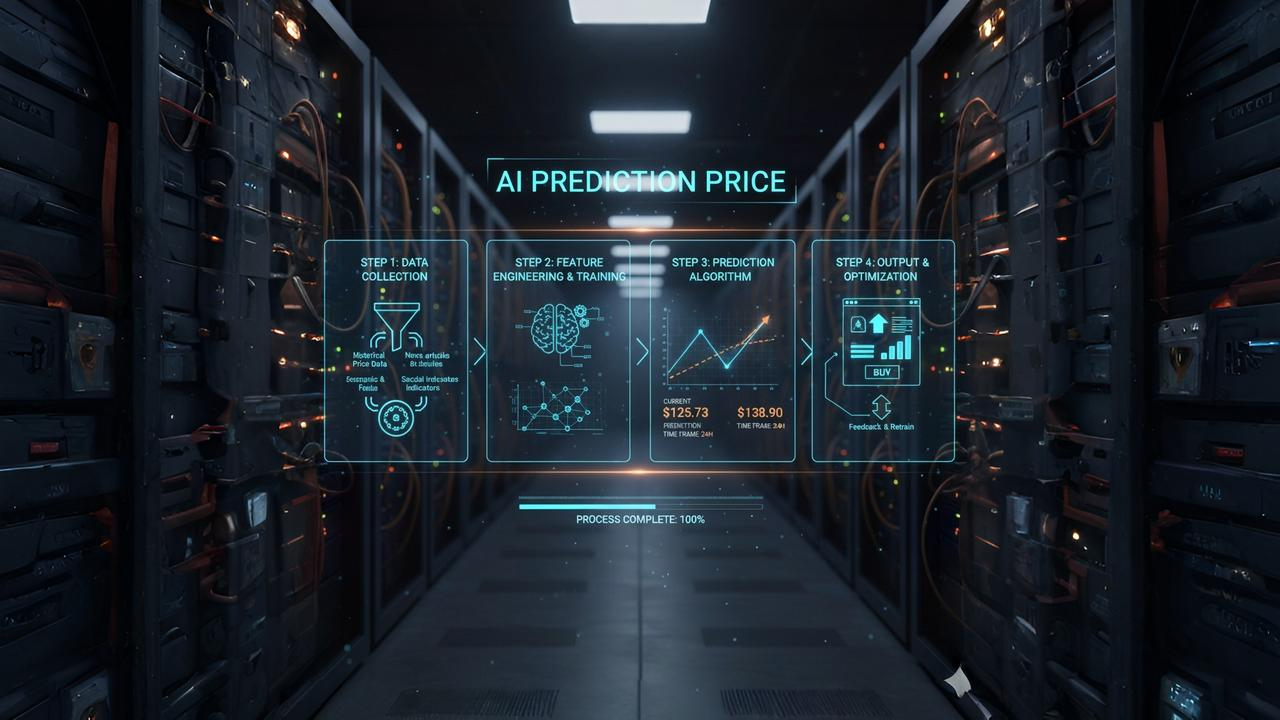
AI prediction begins with massive data aggregation. Historical stock prices, trading volumes, economic indicators, news sentiment, and even social media trends are pulled from multiple sources. This raw data forms the foundation for every prediction.
Markets are messy. Data often contains gaps, anomalies, and inconsistencies. AI models require clean, structured input, so preprocessing involves:
Not all data points are equal. AI systems identify key features—price trends, volatility, moving averages, and technical indicators—that influence market behavior. This step is crucial for improving model accuracy.
Here’s where the magic happens. Deep learning models such as:
Once trained, the model takes recent market data and predicts future prices. Unlike traditional methods, AI can capture nonlinear patterns, sudden shifts, and hidden correlations that humans often miss.
Predictions are validated against actual outcomes using metrics like:
AI-driven prediction transforms investing from reactive to proactive. It empowers traders with real-time insights, reduces risk, and opens doors to algorithmic strategies that outperform manual approaches.