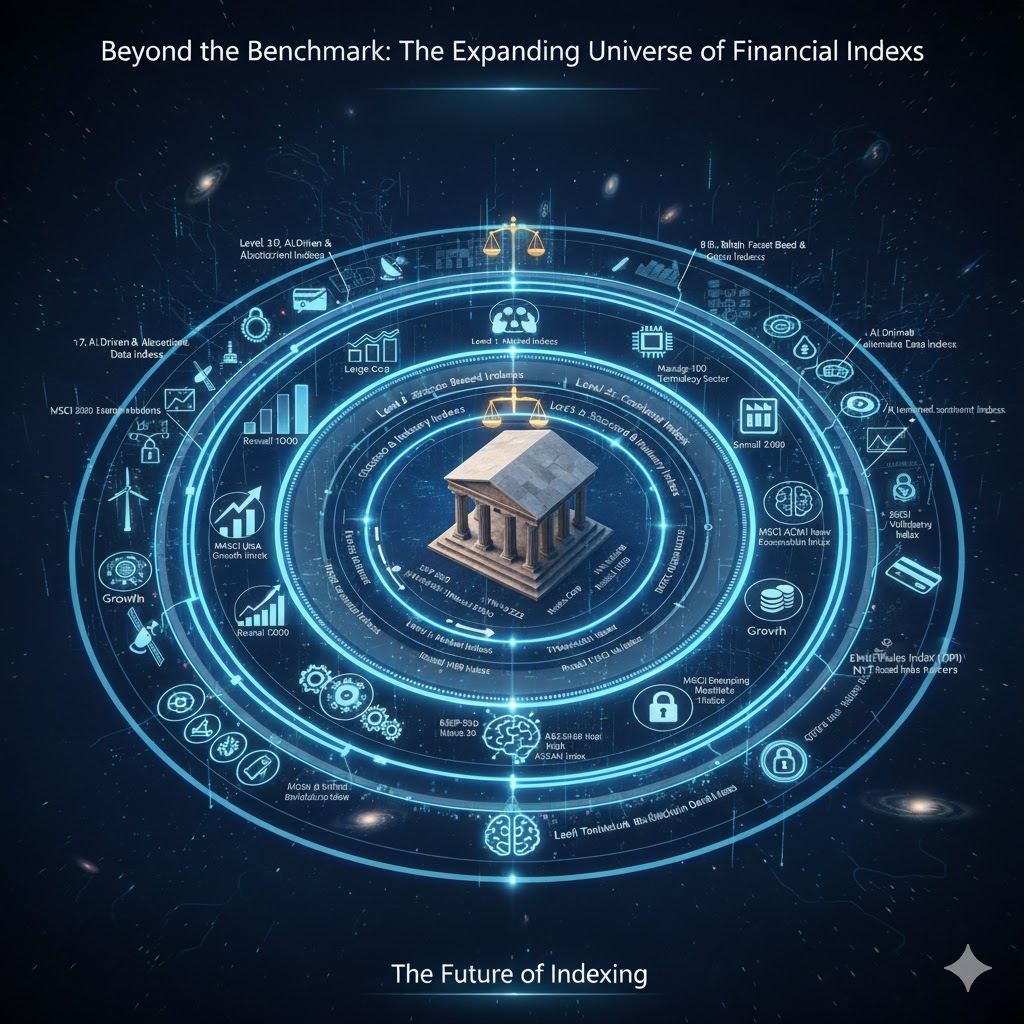
Once upon a time, a stock market index was a straightforward concept—a single number that captured the pulse of a nation’s economy. Think of the Dow Jones Industrial Average or the VN-Index: simple, broad measures of market performance. But in today’s hyper-connected, data-driven world, indexes have evolved into a complex, multi-layered ecosystem. They’re no longer just barometers—they’re blueprints for investment, innovation, and even ideology.
Let’s take a closer look at the multi-level classification of indexes, and how each layer reflects a deeper level of sophistication and strategic intent.
These are the grandfathers of the index world. Market indexes track the overall performance of a country’s or region’s stock market. They’re the go-to indicators for economic health and investor sentiment.
Not all companies are created equal. Size-based indexes categorize stocks by market capitalization—large-cap, mid-cap, and small-cap—offering a more nuanced view of market dynamics.
As economies diversify, so do the indexes. Sector and industry indexes allow investors to focus on specific parts of the economy—technology, healthcare, energy, and beyond.
Style indexes classify stocks based on investment characteristics like growth (fast-growing, high-valuation companies) or value (undervalued, stable earners). These indexes reflect different philosophies of investing.
Thematic indexes are the storytellers of the index world. They track companies aligned with long-term trends—clean energy, AI, cybersecurity, aging populations, and more.
These indexes focus on specific countries, regions, or global markets, offering exposure to local economies or international diversification.
Smart beta indexes break away from traditional market-cap weighting. Instead, they use alternative strategies—like equal weighting, volatility targeting, or fundamental factors—to enhance returns or reduce risk.
These indexes are built around investment factors—quantifiable characteristics that drive returns. Think momentum, quality, low volatility, or dividend yield.
Welcome to the age of machine learning and big data. Some of the most cutting-edge indexes today are built using AI algorithms that analyze alternative data—social media sentiment, satellite imagery, credit card transactions—to predict market movements.
The latest innovation in indexing is happening on the blockchain. Tokenized indexes allow investors to buy fractional ownership in index portfolios using digital tokens. Some are even being minted as NFTs, enabling new forms of ownership, liquidity, and programmability.
The index industry is no longer just about tracking markets—it’s about interpreting them, slicing them, and even predicting them. As technology advances and investor preferences evolve, we can expect even more personalized, real-time, and intelligent indexes to emerge.
In a world of complexity, indexes offer clarity. And as they evolve, they’re not just reflecting the market—they’re helping shape its future.