Most discussions about emerging markets still revolve around China, India, or broader macroeconomic trends. Yet one of the most important developments in global capital markets may be happening elsewhere.
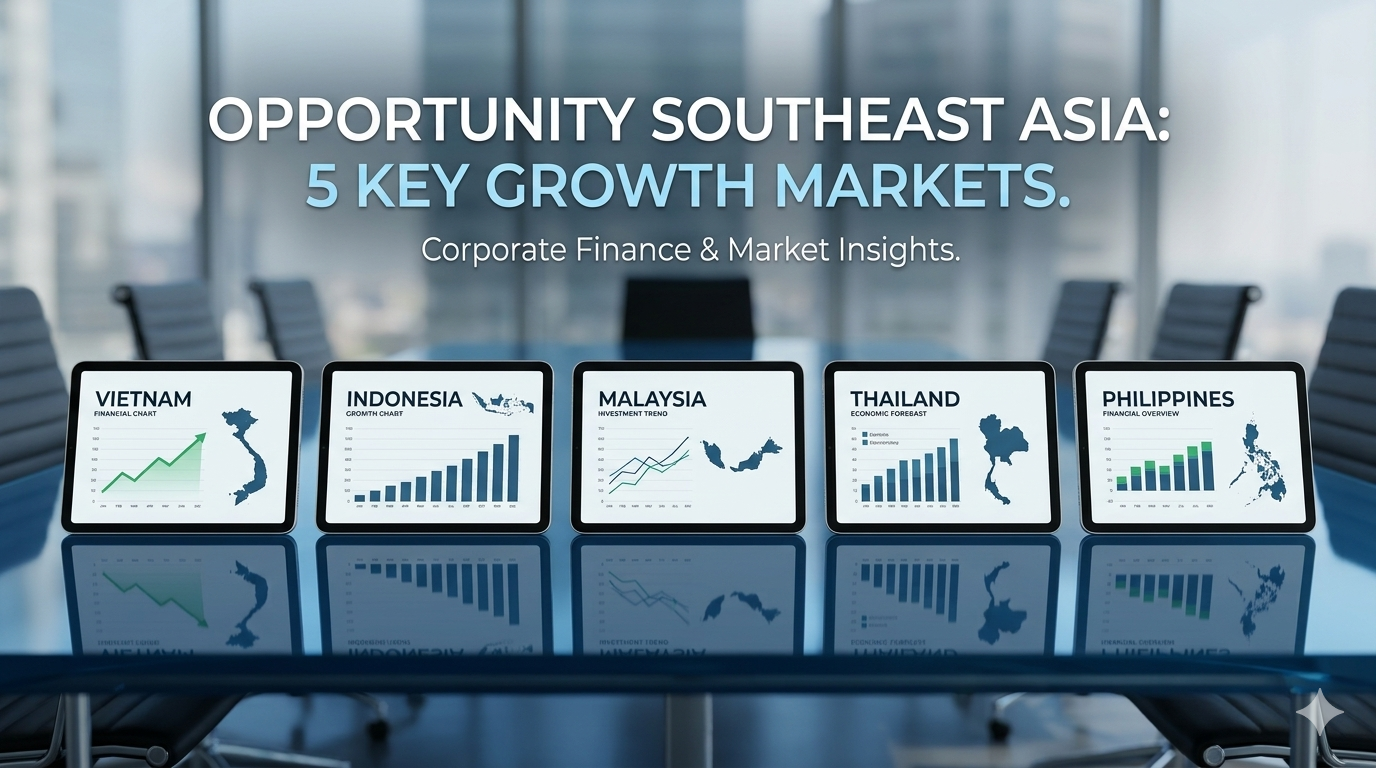
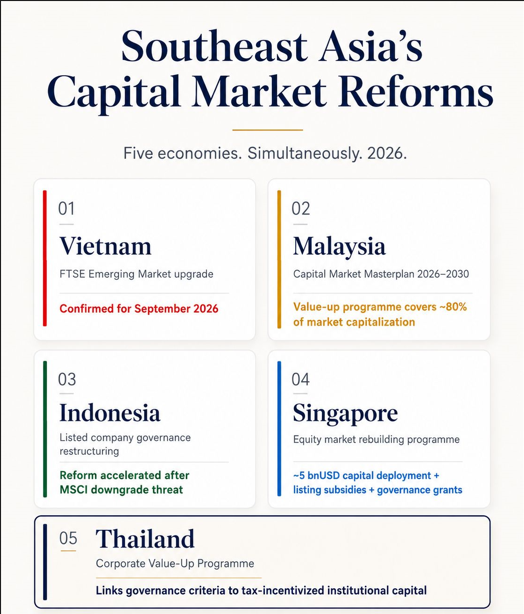
Across Southeast Asia, five countries are simultaneously undertaking major capital market reforms. Vietnam is advancing toward emerging market status, Malaysia is driving corporate value-enhancement initiatives, Indonesia is strengthening governance standards, Singapore is introducing measures to deepen market participation, and Thailand continues to elevate listed-company governance practices. While these initiatives differ in execution, they share a common objective: making capital markets more transparent, efficient, and attractive to long-term investors.
Corporate governance is often viewed as a technical issue, but its impact on investment returns can be profound.
Strong governance frameworks improve transparency, strengthen accountability, and enhance investor confidence. They also reduce the risks associated with concentrated ownership structures, weak disclosure standards, and inefficient capital allocation.
Historically, governance concerns have been among the primary reasons international investors have maintained lower allocations to Southeast Asian equities. As governments and regulators raise standards, that perception may begin to change.
The key takeaway is that governance reform is not simply about compliance—it is about creating the institutional foundations required for sustainable capital market growth.
Among the region’s developments, Vietnam’s upcoming transition from Frontier Market to Secondary Emerging Market status under FTSE Russell stands out as a particularly significant milestone.
Years of reforms aimed at improving settlement processes, market accessibility, governance standards, and trading infrastructure have culminated in a formal upgrade pathway. This transition could increase Vietnam’s visibility among global institutional investors and lead to greater participation from passive and active investment funds.
More importantly, it reflects a broader trend: listed companies are increasingly adapting their governance and investor-relations practices to meet international expectations rather than treating foreign investment as an afterthought.
The reform story is occurring alongside powerful economic trends.
Southeast Asia is home to more than 700 million people, a rapidly expanding middle class, growing digital economies, and increasing integration into global supply chains. The region has become an increasingly important manufacturing and trade hub, benefiting from shifts in global production networks and foreign direct investment flows.
Despite these strengths, Southeast Asian markets remain relatively underrepresented in many global portfolios. This disconnect between economic growth and investor attention creates a compelling opportunity for those willing to look beyond traditional market narratives.
Perhaps the most overlooked aspect of these developments is that they are occurring simultaneously.
Investors often analyze Southeast Asian markets individually, but the broader picture suggests a region-wide improvement in market quality. Better governance, stronger market infrastructure, improved investor protections, and enhanced accessibility collectively increase the attractiveness of Southeast Asia as an asset class.
Rather than viewing Vietnam, Indonesia, Malaysia, Singapore, and Thailand as isolated stories, investors may increasingly need to consider them as part of a larger structural transformation.
Market reforms rarely generate headlines, but they often create the conditions for long-term value creation.
The simultaneous reform efforts taking place across Southeast Asia suggest that the region is entering a new stage of capital market development. While the benefits may not be fully reflected in valuations today, improvements in governance, market accessibility, and institutional quality could have lasting implications for investment flows over the coming decade.
For investors seeking long-term growth opportunities, the most important story in emerging markets may not be where capital is currently concentrated—but where market foundations are being quietly rebuilt.