
The global economy is entering a phase of profound structural transformation. Traditional growth drivers are gradually shifting, while emerging markets are rising to play a central role. A young population, the rapid expansion of the middle class, accelerated urbanization, and growing domestic consumption are creating strong foundations for long-term growth. These structural factors have positioned emerging markets as strategic destinations for global capital flows.
However, economic growth does not necessarily translate into personal wealth growth. Numerous studies and real-world observations across emerging markets show that, despite the rapid expansion of aggregate wealth, personal and family wealth management remains fragmented and insufficiently structured. Many investors face a paradox: active investing does not result in proportional wealth accumulation and, in some cases, leads to a gradual erosion of wealth over time.
The root cause lies not in a lack of investment opportunities, but in the absence of a comprehensive and disciplined wealth management framework, particularly in highly volatile environments such as emerging markets.

In this context, Wealth Management is increasingly viewed not merely as a financial service, but as a comprehensive asset governance mindset. Rather than focusing on individual investments in isolation, Wealth Management emphasizes the design of an integrated asset strategy aligned with an investor’s long-term objectives.
Many analyses of the wealth management industry in Vietnam and other emerging markets indicate that Wealth Management is no longer an exclusive concern of the “ultra-wealthy.” As personal wealth grows and asset structures become more complex, the need for professional wealth management becomes an inevitable requirement for individuals, families, and businesses alike.
This approach is particularly well suited to emerging markets, where growth is accompanied by cyclical risks, policy volatility, and rapid shifts in the macroeconomic environment.
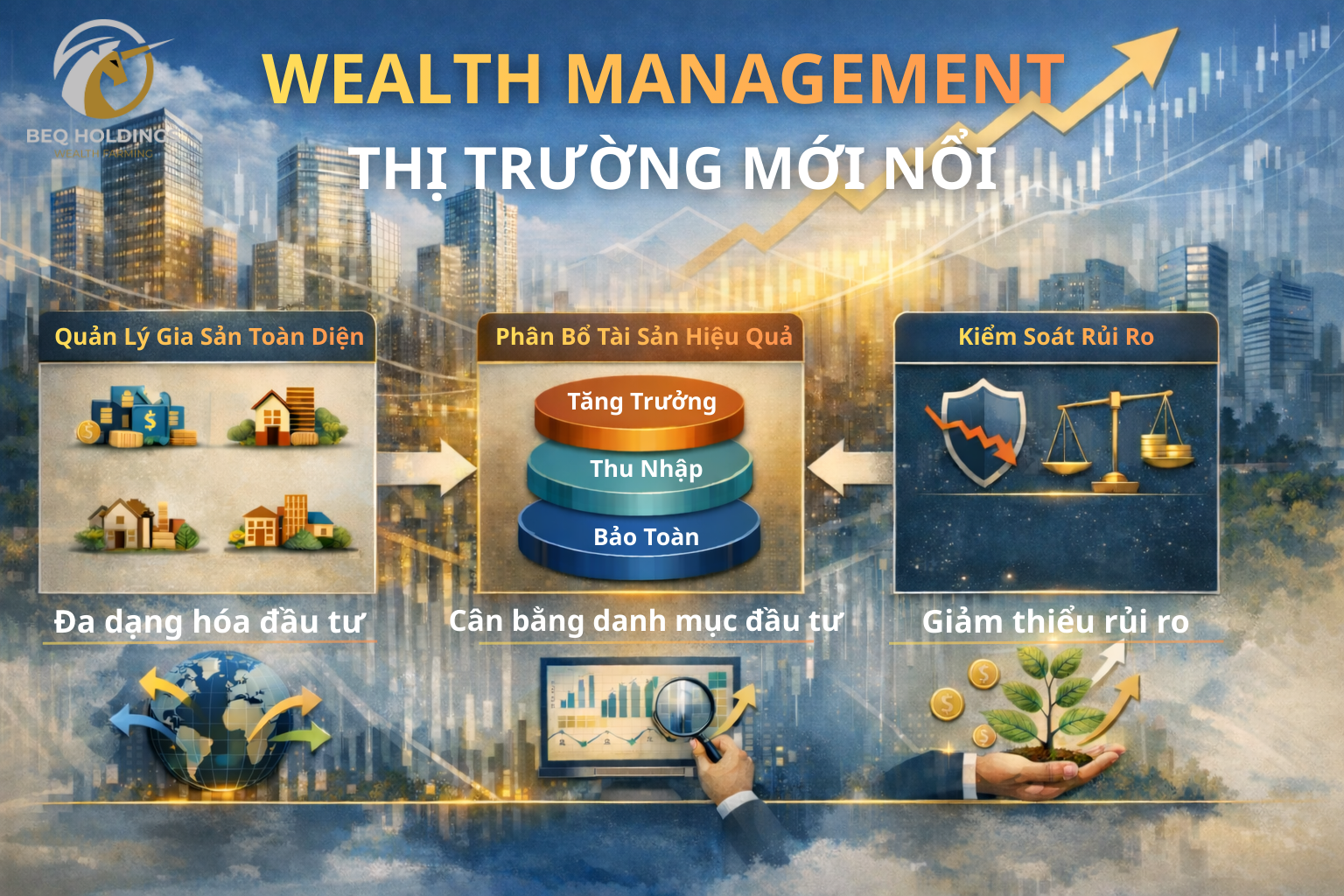
Wealth stewardship is the first and most critical step in effective Wealth Management. Instead of viewing assets as a collection of disconnected investments, this approach treats wealth as a unified ecosystem, encompassing financial assets, business assets, real estate, and other sources of value.
In emerging markets – where economic and policy cycles can change rapidly—a clearly defined wealth management framework enables investors to:
From accumulation and expansion to preservation and intergenerational transfer. This ensures that wealth strategies remain aligned with real needs rather than short-term market fluctuations.
Thereby building a balanced asset structure. This approach supports more stable cash flows while sustaining long-term growth potential.
Allowing portfolios to adapt more effectively to economic cycles and macroeconomic volatility in emerging markets.
Numerous analyses of the wealth management landscape in Vietnam and the broader region suggest that the absence of a holistic wealth management strategy is a key reason why asset growth remains unsustainable, even as the overall economic environment continues to expand.
If wealth stewardship addresses the question of what the overall wealth picture looks like?, asset allocation answers the question of how resources should be allocated to achieve long-term objectives?
Within Wealth Management, strategic asset allocation plays a decisive role in determining long-term portfolio performance—particularly in emerging markets, where volatility can emerge rapidly and with greater intensity.
An effective asset allocation strategy is typically built upon:
A coherent combination of asset classes, geographic exposures, and investment strategies ensures that portfolios are not dependent on a single scenario. This approach enhances the ability to achieve stable growth while preserving value over the long term.
If growth is the objective, risk management is the condition for long-term sustainability – especially in emerging markets. Within Wealth Management, risk control is not merely defensive in nature; it is a structural component of asset allocation strategy. This approach is implemented through intentional diversification, drawdown control, cyclical rebalancing, and data-driven decision-making.
From the perspective of emerging market analysis, the greatest challenge for investors lies not in a lack of opportunities, but in the absence of sufficiently reliable indicators to assess risk and identify market cycles. As macroeconomic conditions, capital flows, and investor sentiment shift rapidly, decisions driven by emotion often lead to strategic misalignment and increased long-term portfolio risk.
For this reason, measurement tools and analytical platforms play a particularly critical role in helping investors maintain discipline and consistency within Wealth Management.
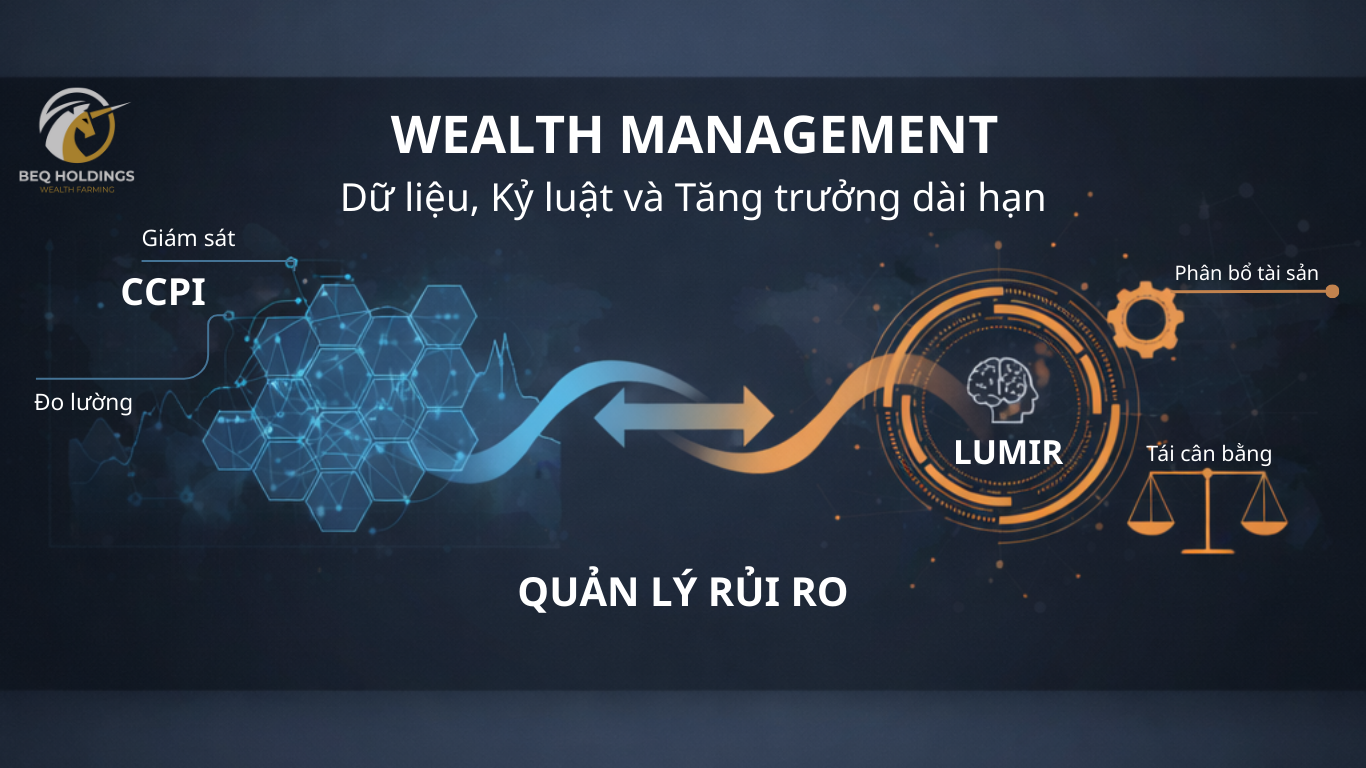
CCPI serves as a data and index platform that supports the monitoring and measurement of cyclical and structural factors across emerging markets. By aggregating macroeconomic signals, capital flows, and valuation metrics, CCPI enables investors to clearly understand current market conditions and long-term trends, thereby reducing short-term, reactive, or emotionally driven decisions.
Lumir, in contrast, is positioned as a methodological framework and discipline support system for wealth stewardship. Lumir focuses on helping investors maintain a coherent asset allocation mindset, manage systemic risk, and adhere to predefined rebalancing principles. By standardizing investment thinking and behavior, Lumir helps mitigate the influence of emotions in the decision-making process.
This approach does not aim to predict short-term market movements. Instead, it seeks to build a Wealth Management system capable of adapting to volatility. Through the combined application of CCPI and Lumir, BeQ Holdings supports investors in managing cyclical risk while protecting and enhancing long-term wealth in a sustainable manner.
👉 Contact BeQ Holdings to receive an investment strategy tailored to your long-term goals
Text box item sample content