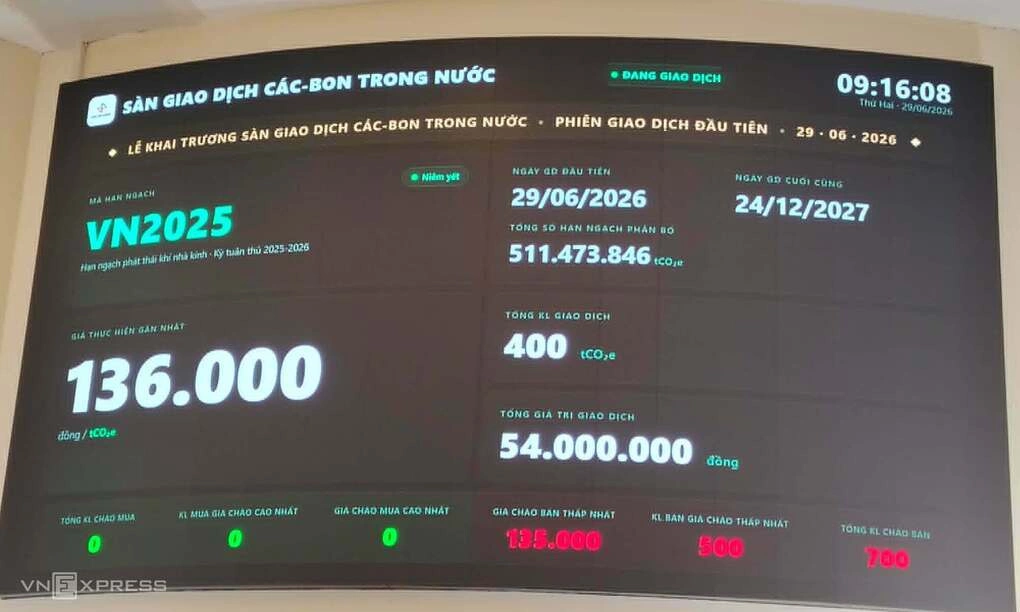
Vietnam has officially entered a new phase in its climate and sustainability agenda by recording its first domestic carbon trading transaction, with carbon credits traded at VND 136,000 (approximately US$5.2) per ton of CO₂ equivalent (CO₂e).
This landmark transaction represents far more than the sale of carbon credits. It marks the practical beginning of Vietnam’s domestic carbon market—a key policy instrument designed to reduce greenhouse gas emissions through market-based mechanisms while supporting the country’s long-term economic transformation.
The transaction is part of Vietnam’s broader roadmap to establish a national carbon trading system. By assigning an economic value to carbon emissions, businesses are encouraged to invest in cleaner technologies, improve energy efficiency, and adopt more sustainable production practices. Companies that successfully reduce emissions below their allocated limits can generate carbon credits, creating new financial opportunities while contributing to national climate goals.
Vietnam’s carbon market is expected to play a crucial role in supporting the country’s commitment to achieve Net Zero emissions by 2050. The pilot phase will gradually involve high-emission industries such as power generation, cement, steel, and manufacturing before expanding to additional sectors in the coming years. As regulatory frameworks continue to mature, the market is also expected to enhance transparency, attract green investment, and strengthen Vietnam’s integration into global carbon finance networks.
The launch comes as carbon pricing mechanisms continue to expand worldwide. More countries are recognizing carbon markets as an effective tool for balancing economic growth with environmental responsibility. For Vietnam, this first transaction demonstrates growing institutional readiness and highlights the country’s commitment to aligning with international sustainability standards and ESG practices.
As the domestic carbon market develops, it is expected to create new opportunities for businesses, investors, financial institutions, and technology providers while accelerating the transition toward a low-carbon, resilient, and sustainable economy.