After observing the market long enough, an uncomfortable reality begins to emerge:
prices often move at the “wrong” time, on the “wrong” news, and rarely wait for investors to fully understand what is happening before moving on.
It increasingly appears that the market operates on its own internal schedule—
a rhythm that rarely makes headlines, yet repeats itself with striking consistency.
When the entire series of previous analyses is viewed together, a natural question arises:
👉 What causes broad-based price movements, even when the narrative has yet to be told?
The answer lies in Index Review—the mechanism through which the market quietly adjusts itself.
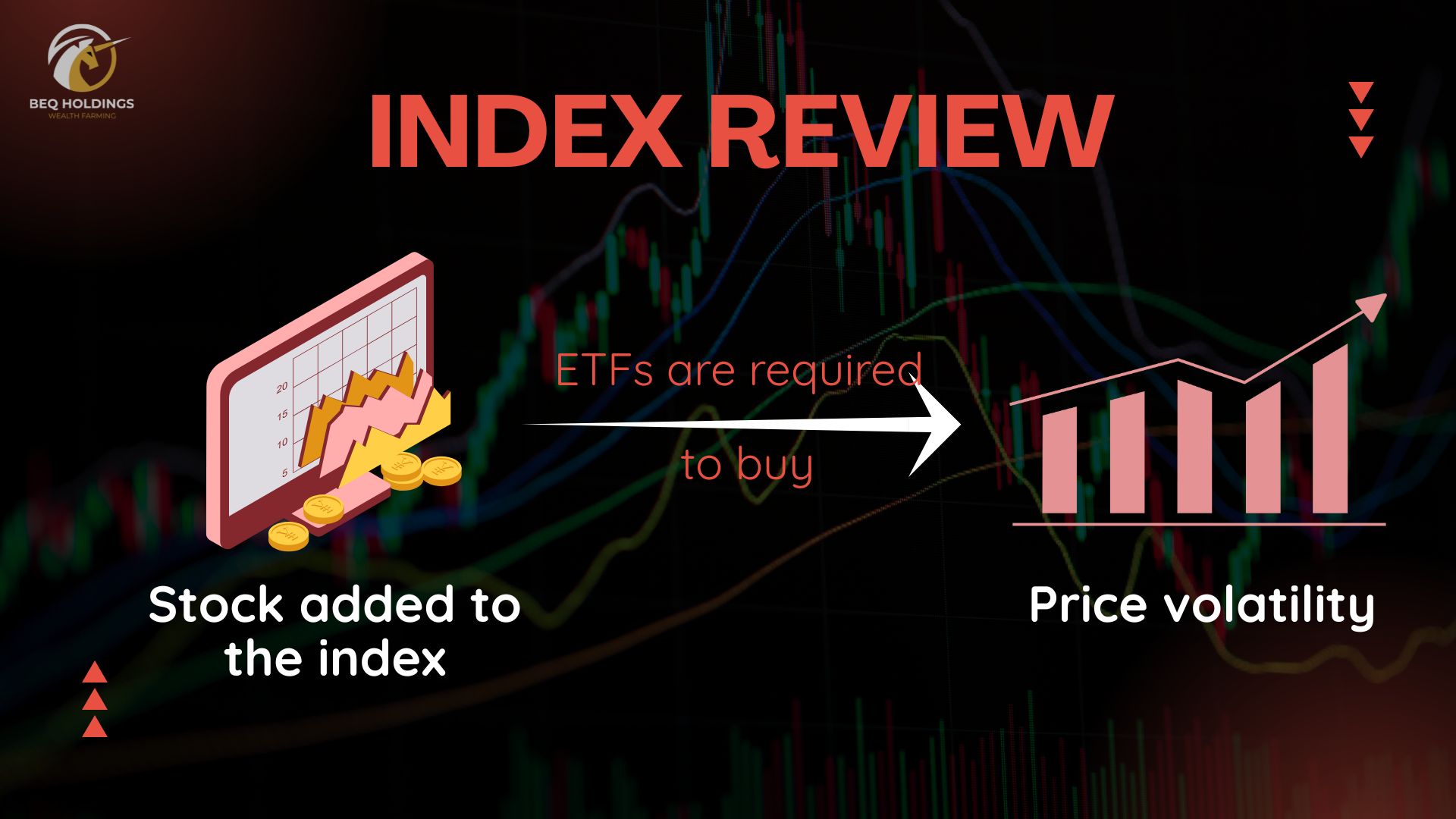
Index Review refers to the periodic process by which index providers (such as MSCI, FTSE, and S&P Dow Jones) reassess and rebalance their indices, including:
This process follows a predetermined schedule (quarterly, semi-annual, or annual) and is based entirely on quantitative criteria, such as:
A critical point for newer investors is that Index Review is neither a forecast nor a subjective judgment.
It is a systematic, data-driven “periodic audit” based on historical and observed metrics.
Consider an index tracking the 30 largest stocks in a given market.
During the Index Review:
At this stage, the act of “addition” or “removal” does not immediately move prices.
The impact begins in the next step:
This creates:
As a result, Index Review is often the starting point of price movements that retail investors observe only in outcome, not in cause.
A typical Index Review cycle consists of three key phases:
1. Data Convergence Phase
Before any announcement is made, metrics such as market capitalization, liquidity, and free-float gradually converge toward thresholds that indicate which stocks are approaching inclusion or exclusion.
2. Announcement Date
The index provider formally releases the list of changes. At this point, the broader market begins to pay attention—but for large pools of capital, this is rarely the starting point.
3. Effective Date
The changes officially take effect. ETFs and index funds must rebalance their portfolios to remain aligned with the index they track.
It is this mandatory nature that creates the distinction: capital flows are driven not by expectations, but by structural requirements.
Over the past two decades, the scale of passive investment has expanded at a pace that active strategies can no longer ignore.
In recent years, global assets under management in index funds and ETFs have exceeded tens of trillions of U.S. dollars, accounting for an ever-growing share of total equity market capital. In the United States alone, funds tracking major indices such as the S&P 500, Nasdaq 100, and Russell indices hold a substantial portion of shares outstanding.
This leads to a critical consequence: when index structures change, capital flows must change accordingly.
Market evidence consistently shows that:
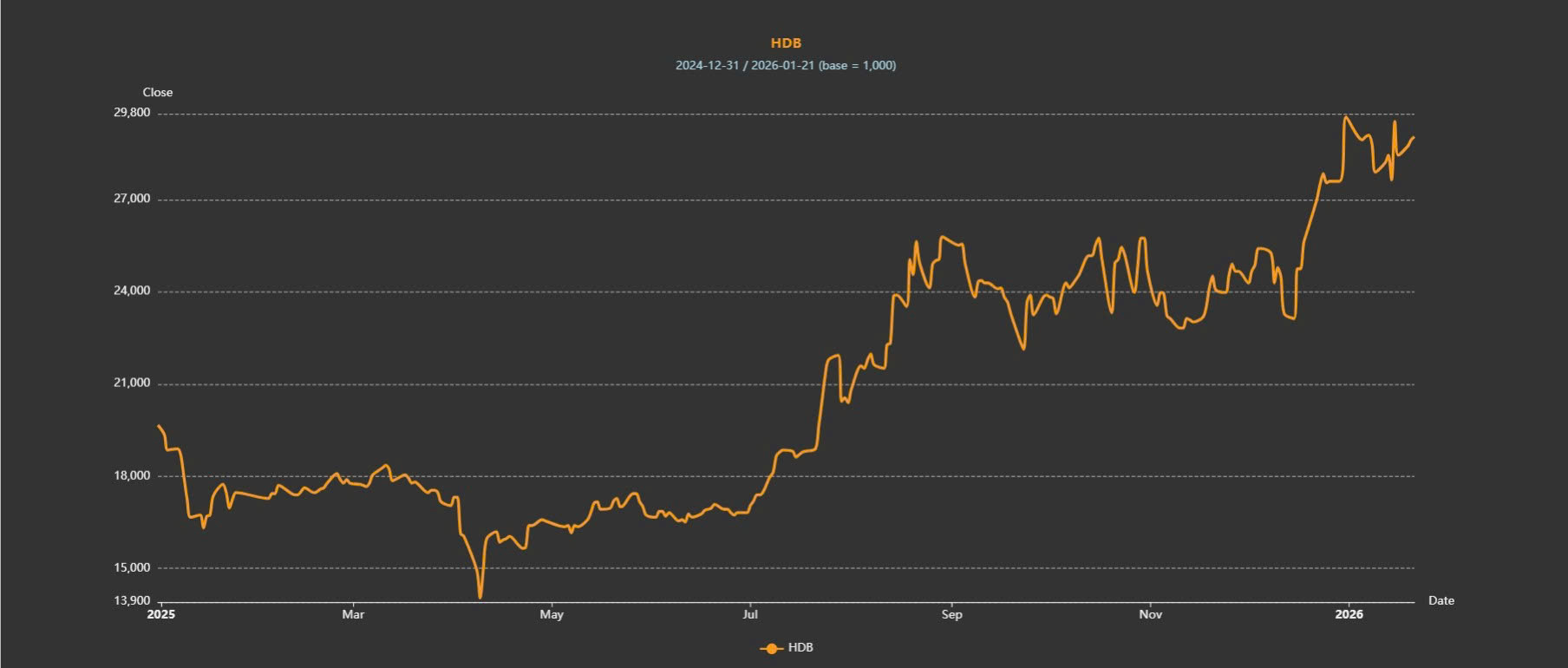
Figure: HDB shares of Ho Chi Minh City Development Joint Stock Commercial Bank (HDBank) rose ahead of its first VN30 index review in January 2026.
Conversely, stocks removed from indices typically face mechanical selling pressure, even when their underlying fundamentals remain largely unchanged.
Notably, these effects repeat across multiple review cycles, markets, and index families. This persistence suggests that the phenomenon is not random, but a direct outcome of index-based capital allocation mechanisms.
For individual investors, Index Review often comes into focus only after changes have been publicly announced. By then, much of the impact has already been priced in or is in the process of being reflected.
The true opportunity does not lie in “receiving information earlier,” but in:
Index Review therefore does not reward the fastest reaction, but the deepest structural understanding.
The most common mistake is treating Index Review as a standalone news event.
Once additions and deletions are announced, many investors act under the assumption that “the market will react further.” In reality, mechanical flows have often been positioning well in advance.
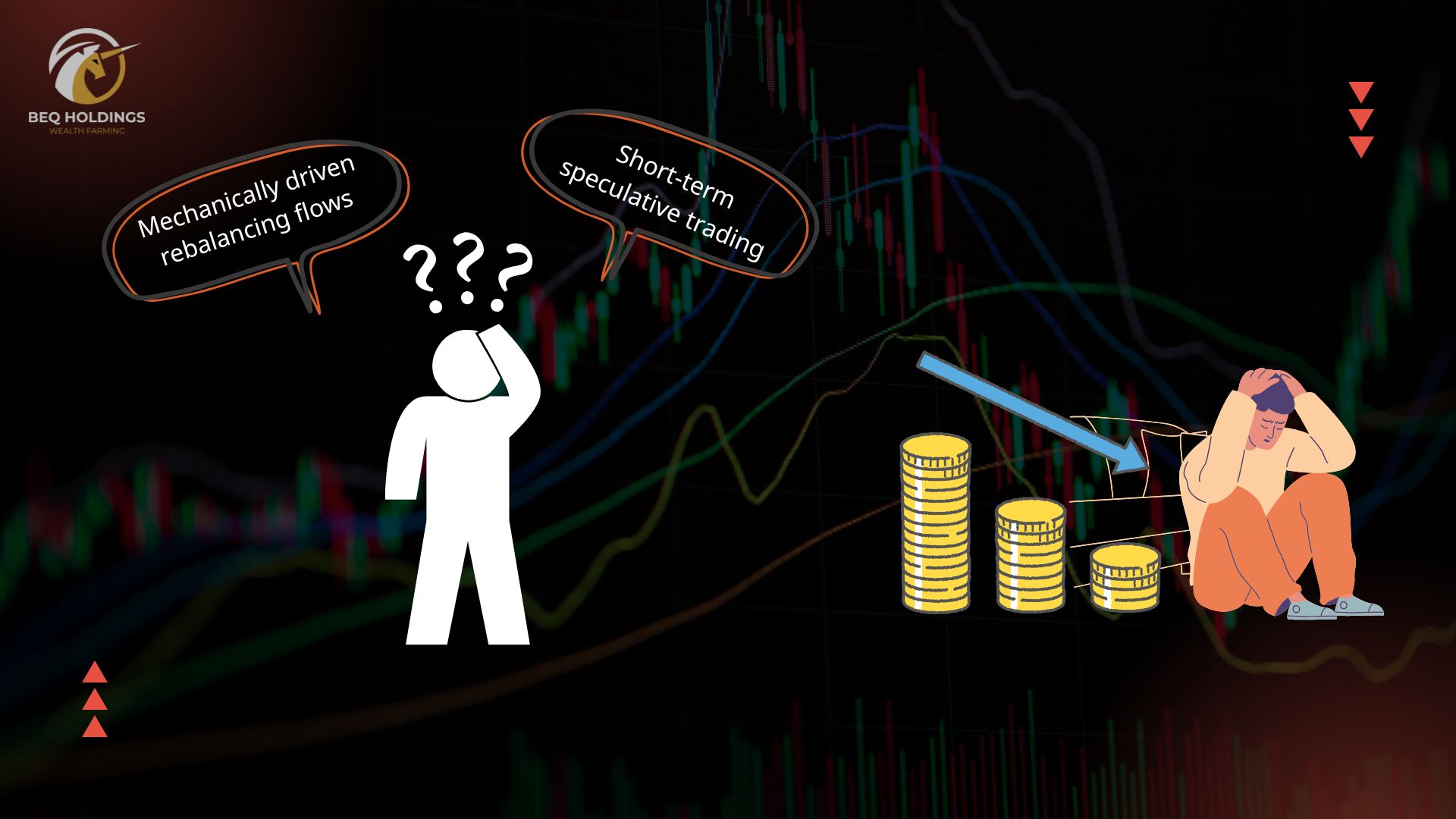
Another frequent error is assuming that all price movements around Index Review represent investment opportunities, without distinguishing between:
Without a clear analytical framework, investors are prone to consistently arriving after large institutional flows have already passed.
For certain institutions, Index Review is no longer viewed as an isolated event, but as a sequence of observable and measurable behaviors.
Rather than asking how the market will react, they ask the inverse question:
At each stage of the Index Review cycle, what actions is the market structurally forced to take?
This perspective enables the development of strategies designed to track Index Review behavior—not to forecast prices, but to measure how closely the market is reflecting a pre-programmed mechanism.
Some of these approaches have been formalized and index-linked into specialized strategic indices focused specifically on Index Review cycles.
How such strategies are constructed, and why they can persist over time, will be examined in the next article.
For most investors, Index Review appears as a brief headline after the process has already concluded.
For institutions that understand how markets truly operate, Index Review is not news—it is a process that can be tracked, measured, and prepared for in advance.
As passive capital continues to grow, index rebalancing events are no longer simple portfolio adjustments. They generate mechanical, cyclical capital movements that are large enough to shape short-term price behavior.
The real question is not “What is changing in the index?”
but rather:
Who recognizes those changes before they become mandatory for the market?
Drawing on observations across multiple cycles, BeQ Holdings approaches Index Review not as an isolated event, but as a layer of structural market data.
Rather than reacting after announcements, BeQ focuses on:
These analyses are systematized within BeQ’s content and data ecosystem, including:
These are not tools for short-term trading, but foundations for viewing markets through an institutional lens.
👉 In the next article, we will examine how a seemingly passive index mechanism can be transformed into a cyclical, repeatable capital flow–tracking strategy.
If you have ever viewed indices as mere “benchmarks,” you may be overlooking the most important structural force in the market.
Contact BeQ Holdings for consultation
Hotline: +84 941 753 139
Email: contact@beqholdings.com
Text box item sample content