In recent years, a growing number of investors have focused on foreign ETF flows, Vietnam’s potential market reclassification, and index-based investing.
Yet a recurring paradox persists: many investors correctly identify which stocks ETFs will buy, but their portfolios still underperform.
The issue is not whether ETFs buy—but what happens after ETFs have finished buying.
This is precisely where the BeQ Superstar Index takes a fundamentally different approach from conventional market thinking.
A common misconception is:
“ETF buys → price will continue to rise strongly.”
Empirical data across multiple markets suggests otherwise.
International Reference Data
According to MSCI and Bloomberg statistics:
ETFs do not buy to maximize returns; they buy to track an index.
Once allocation is completed, they have no structural reason to continue purchasing.
👉 This creates a “profit gap” that many retail investors fail to recognize.
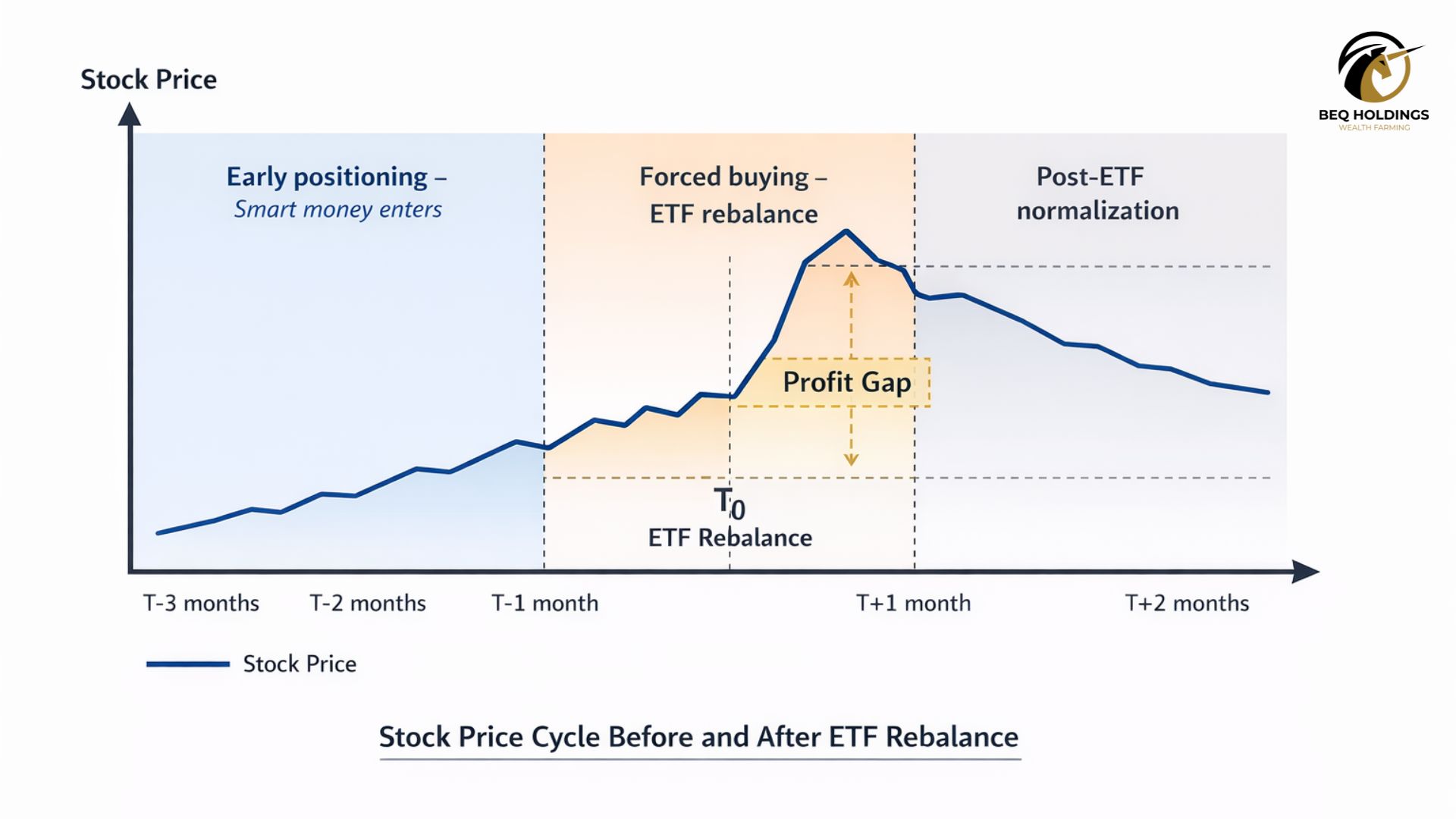
In practice, many investors:
The result:
👉 Correct ETF prediction ≠ Effective investment.
The core issue lies in timing and portfolio structure.
Rather than focusing solely on what ETFs may buy, the BeQ Superstar Index asks a more critical question:
👉 After ETF allocation is completed, is the stock still suitable to hold?
Accordingly, the index evaluates not only ETF inclusion probability but also:
Aggregated data from 2021–2025 shows:
By contrast, portfolios filtered based on index retention probability and periodic review discipline demonstrate:
This represents the core operating logic of the BeQ Superstar Index.
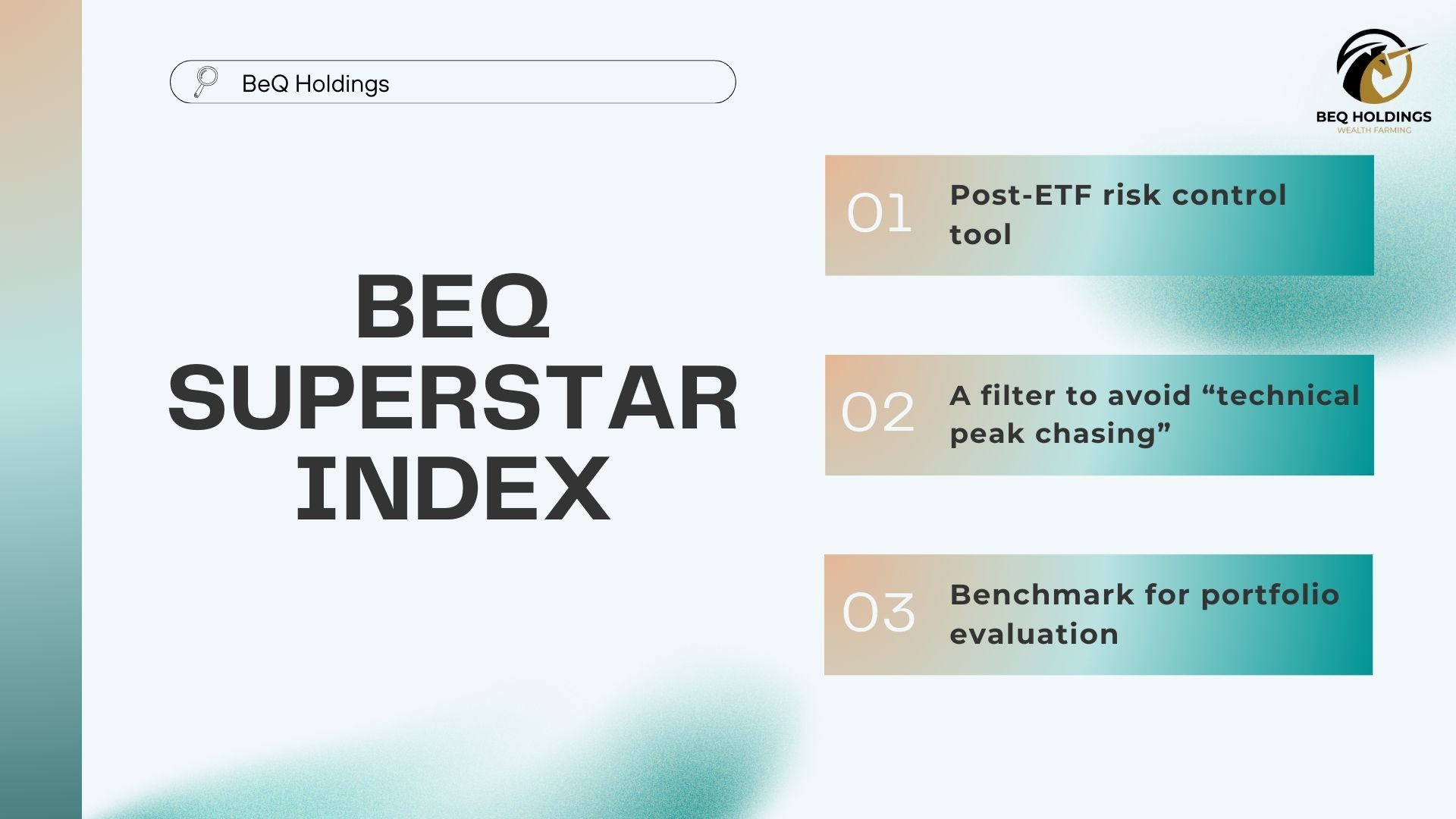
In practice, many investors use the BeQ Superstar Index as:
Instead of asking:
“Will ETFs buy?”
The index helps answer:
“After ETFs finish buying, is my portfolio still structurally sound?”
As Vietnam moves closer to:
👉 More stocks will be touched by ETF flows—but not all are suitable for long-term holding.
The advantage will belong to investors who:
ETFs can generate strong demand, but ETFs are not a complete investment strategy.
The BeQ Superstar Index was not built to:
Instead, it focuses on:
In the era of index investing, understanding what happens after ETF allocation is just as important as anticipating ETF purchases.
👉 Is your portfolio benefiting from ETF flows—or dependent on them?
Discover how the BeQ Superstar Index helps investors build structurally resilient portfolios after each rebalancing cycle.
Contact BeQ Holdings for consultation
Text box item sample content