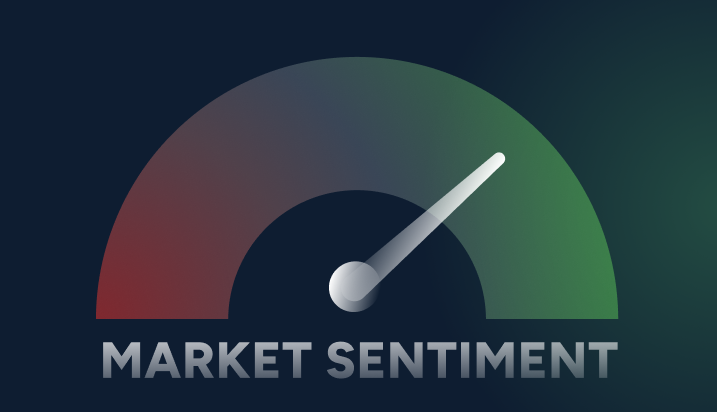
In today’s hyper-connected world, markets don’t just move on earnings reports—they move on emotions. Tweets, headlines, Reddit threads, and even emojis can send billions of dollars swinging in seconds. Welcome to the era of sentiment-driven investing, where algorithms read the crowd’s mood and turn it into actionable signals.
Sentiment indicators measure the emotional tone of the market—bullish, bearish, or neutral—by analyzing data from:
These signals are quantified into scores, often ranging from -1 (extremely bearish) to +1 (extremely bullish).
Sentiment analysis uses Natural Language Processing (NLP) and machine learning to classify text as positive, negative, or neutral. Advanced models even detect sarcasm, slang, and emojis—critical in meme-stock culture.
For example:
Markets are not purely rational. Behavioral finance shows that fear and greed drive short-term price swings. Sentiment indicators capture these psychological waves before they fully reflect in price charts.
Case in point:
On its own, sentiment can be noisy. But when combined with technical analysis (trend confirmation), volatility metrics (risk assessment), and AI models (pattern recognition), it becomes a game-changer.
Imagine this:
Sentiment indicators are no longer a novelty—they’re a necessity. In a market where a single tweet can wipe out billions, understanding the crowd’s mood is as critical as reading a balance sheet. The future belongs to investors who can merge data science with behavioral insight, turning raw emotion into strategic advantage.
BUT
Combining AI models, technical analysis, volatility metrics, and sentiment analysis creates a multi-factor prediction framework that is far more robust than relying on any single method.