For many years, news has been widely regarded as the primary cause of price movements in equities, indices, and financial markets more broadly.
The media focuses on interest rates, inflation, geopolitical conflicts, and monetary policy.
Retail investors read the headlines, react, and expect prices to move in the direction suggested by the news flow.
Yet, for those who observe markets long enough, a familiar paradox emerges: prices frequently move well before the news becomes official.
This raises a more important question than any breaking headline:
👉 Do financial markets truly operate based on news, or is news merely the visible surface of a much deeper mechanism?
At first glance, the relationship between news and price action appears straightforward:
This explanation is intuitive, accessible, and especially appealing to newer investors. In reality, however, financial markets do not operate in such a linear manner.
There are countless recurring situations where:
If news were the direct cause of price movements, such patterns would not occur with such consistency.
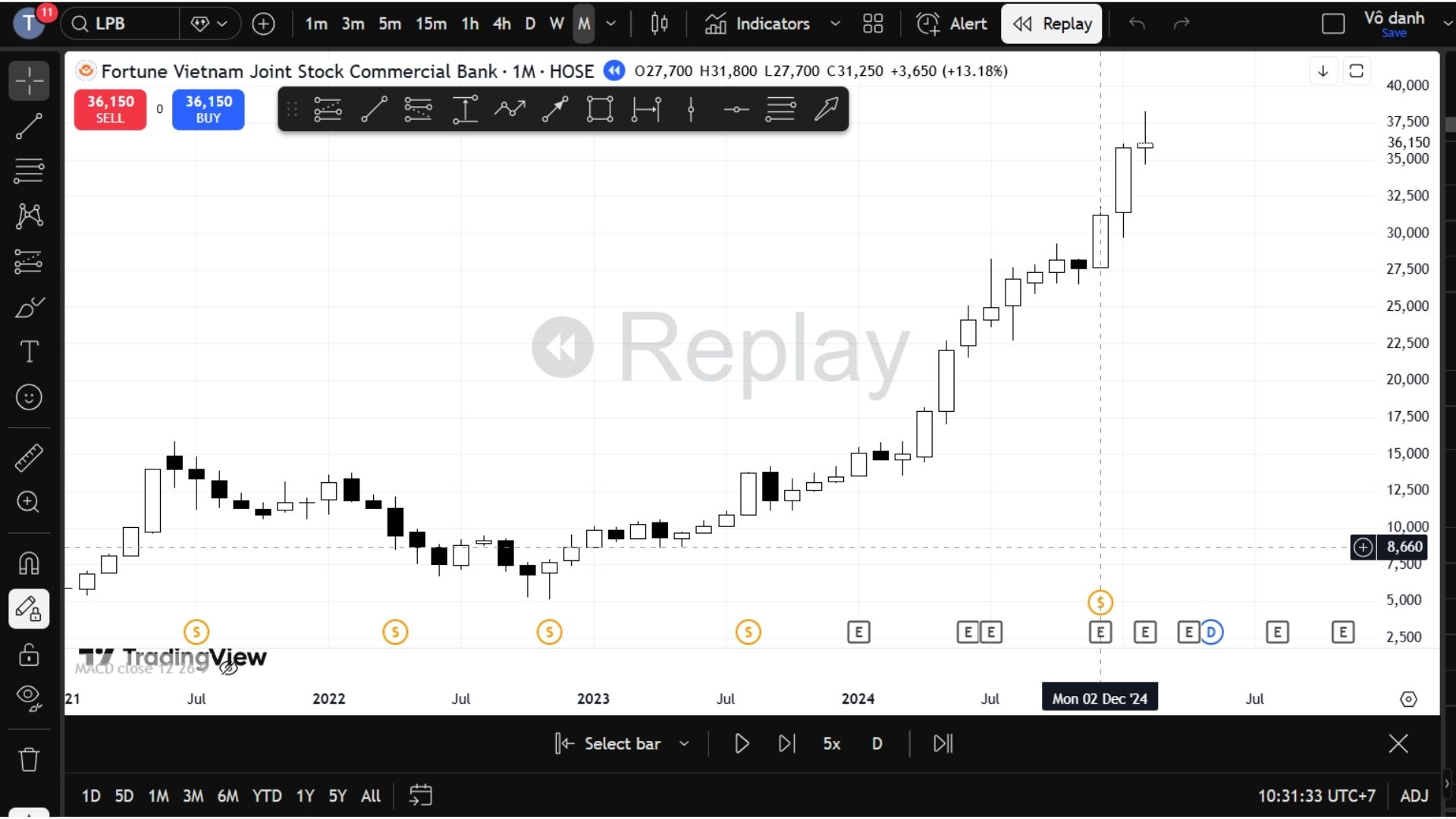
Illustration: LPB (Lien Viet Post Bank) shares rallied ahead of the first VN30 index review in January 2025.
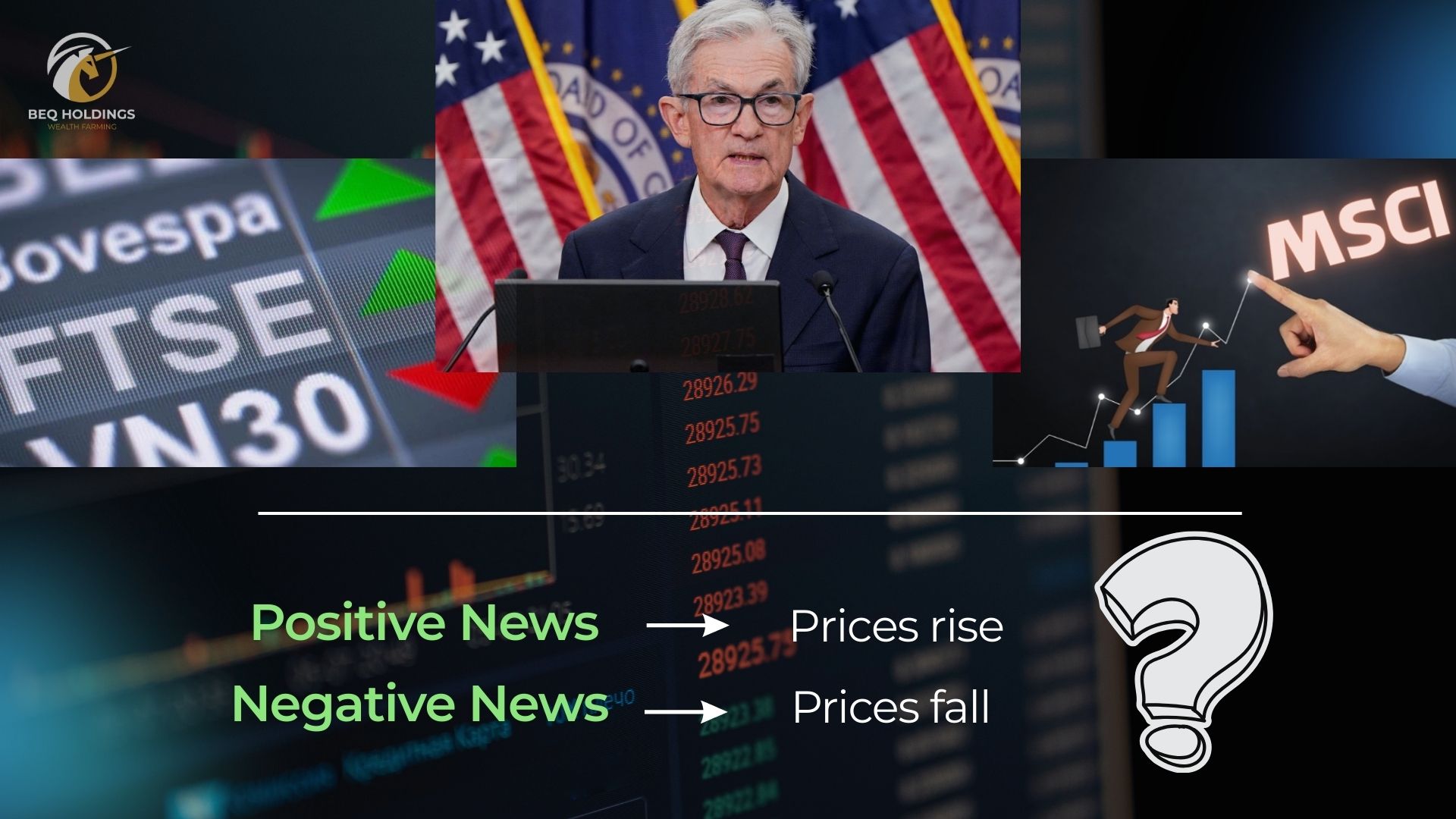
One does not need complex examples—only a review of patterns that have repeated over many years:
Markets frequently move decisively before the official policy announcement.
When the decision is released, prices often fail to follow the “result” and may even reverse direction.
Retail investors wait for the data release to react.
Institutional capital, by contrast, is positioned in advance based on expectations and scenario analysis.
Many stocks rally ahead of strong earnings reports, only to weaken once the “good news” is officially confirmed.
These are not anomalies. They are recurring characteristics of how financial markets function.
Institutional investors, asset managers, and financial institutions do not trade on news in the way most investors assume.
The reasons are straightforward:
Large pools of capital do not wait for confirmation from headlines.
They act based on expectations, market structure, and internal capital allocation mechanisms.
Put simply:
👉 News is the published outcome—not the original driver—of price movements.
Some investors read news to react.
Others study market structure to position ahead of it.
This distinction determines whether:
Once investors recognize that news is only the surface layer, the question shifts from
“What news is coming?”
to
👉 “Where is capital positioning itself next?”
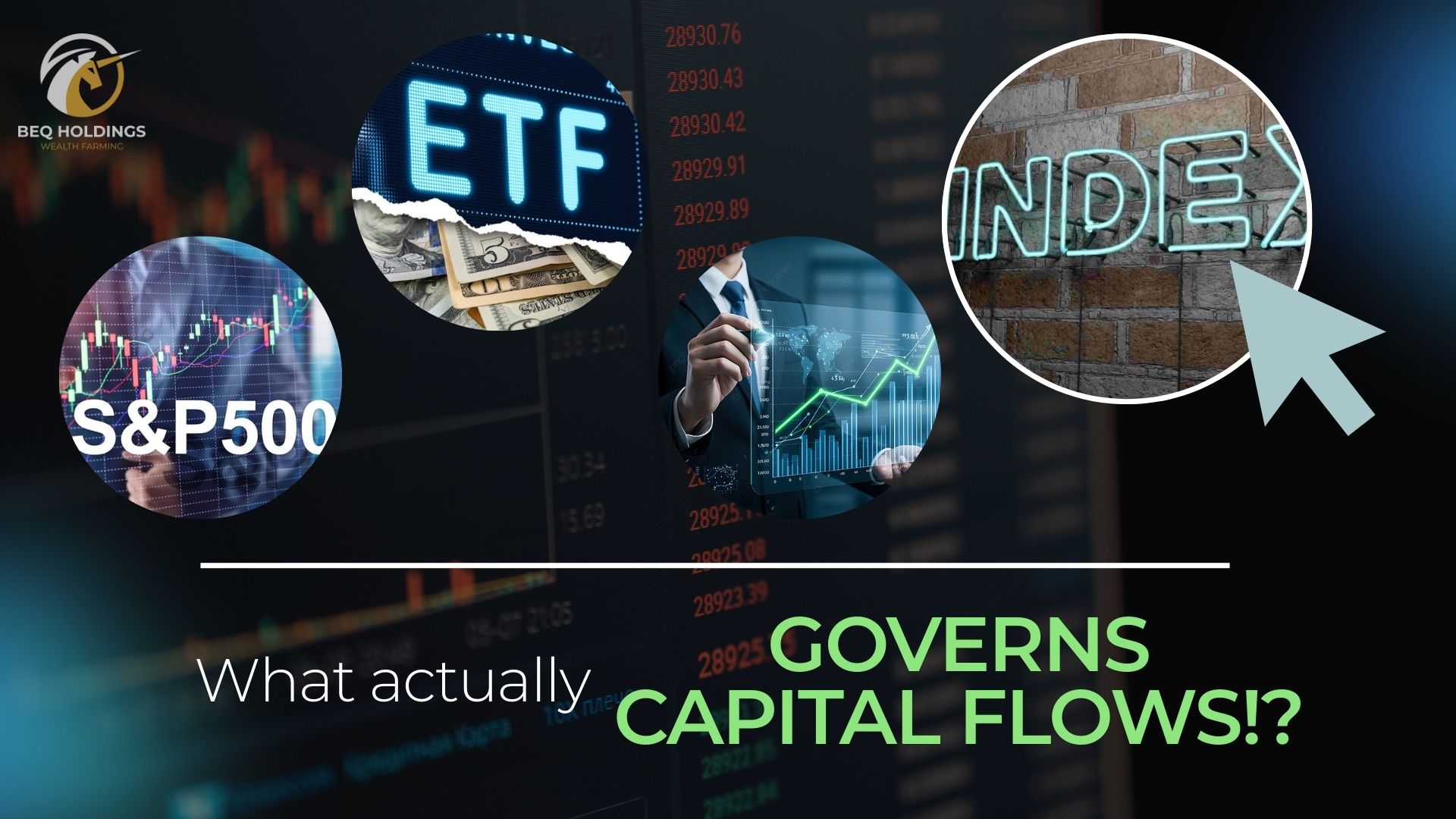
If news is not the core driver, what truly governs financial markets?
The answer lies in forces that receive far less attention, yet command trillions of dollars:
In the institutional investment world, an index is not merely a number.
👉 An index functions as a map, showing:
BeQ Indexes are designed for investors who seek to observe markets at a structural level, rather than making decisions based on short-term news cycles.
Instead of attempting to answer “Where will prices go next?”,
BeQ Indexes focus on a more fundamental question:
👉 What state is the market currently in, and how is capital being allocated?
The BeQ index system serves as a neutral analytical framework, enabling users to monitor:
For those who wish to access real-time data and observe market structure directly, BeQ provides transparent and accessible platforms:
📌 CCPI represents the system; Dashboard Lite is where that system becomes observable in practice.
Financial markets do not operate on news—at least not in the way most investors believe. News represents only the most visible layer of a far more complex system.
Behind every price movement lie:
Once this is understood, a critical insight emerges:
to understand markets, one cannot rely solely on news—one must understand indices and capital structure.
Contact BeQ Holdings for a complimentary consultation:
Hotline: +84 941 753 139
Email: contact@beqholdings.com
Text box item sample content