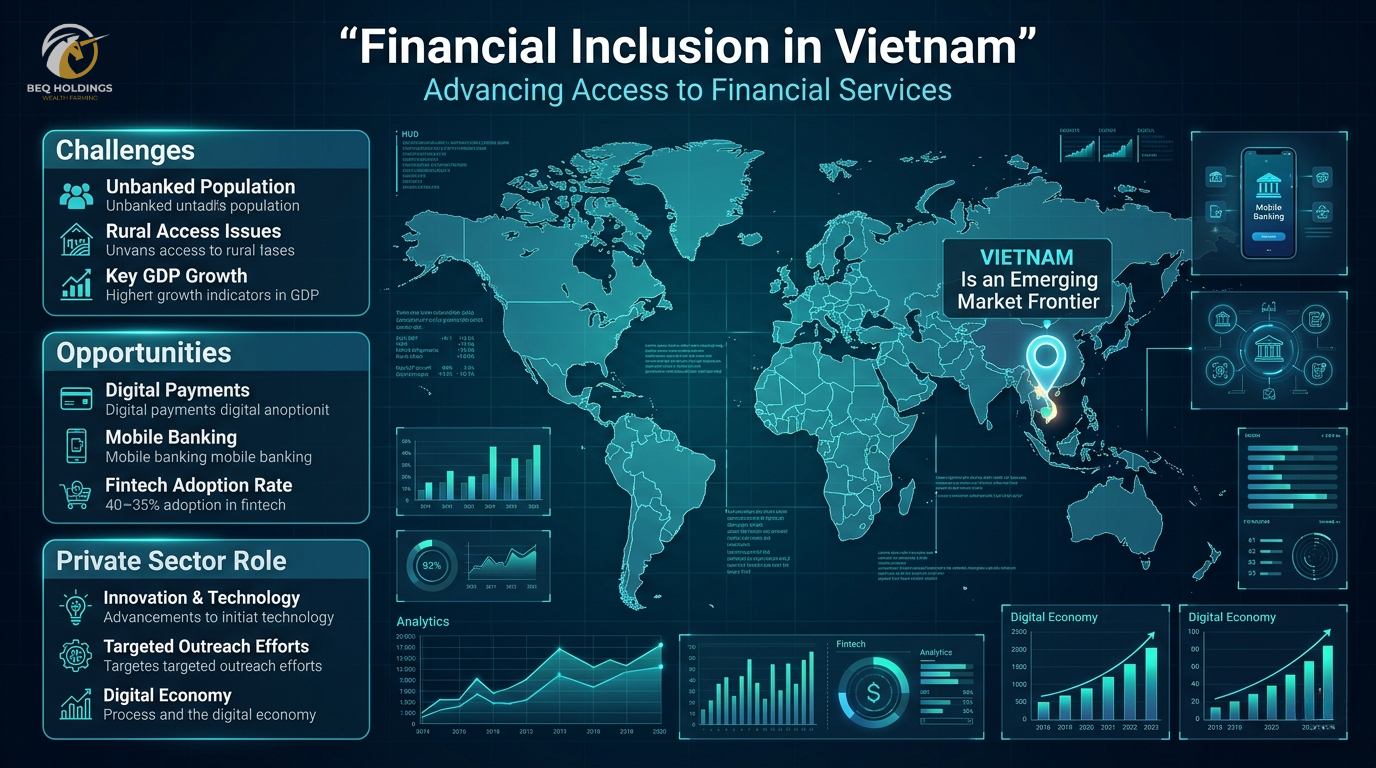
In recent decades, financial inclusion has emerged as a central pillar of economic development, reflecting the importance of ensuring that individuals and businesses have access to essential financial services. While significant progress has been achieved globally, large segments of the population – particularly in emerging markets – remain underserved by formal financial systems, limiting their ability to fully participate in economic activities.
Against this global backdrop, Vietnam stands out as one of the most dynamic and promising frontiers of financial inclusion. Rapid economic growth, a young and digitally connected population, and strong policy commitment have created favorable conditions for expanding access to financial services. At the same time, persistent structural challenges highlight the need for continued innovation and targeted solutions.
In this evolving landscape, private sector institutions play an increasingly important role alongside governments and international organizations. As a financial services provider, BeQ Holdings is well positioned to contribute to Vietnam’s financial inclusion journey through innovation, digital solutions, and targeted outreach strategies.
Financial inclusion refers to the provision of accessible, affordable, and appropriate financial services to all individuals and businesses, particularly those traditionally underserved or excluded from the formal financial system. These services include payments, savings, credit, and insurance.
Importantly, financial inclusion goes beyond access – it emphasizes effective usage. True inclusion is achieved when individuals can use financial services in ways that improve their economic well – being. As such, it is closely linked to broader development goals, including poverty reduction, economic participation, and social equity.
Financial inclusion generates measurable economic and social benefits through several key channels:
Financial inclusion has become a central focus of global development policy, driven by technological innovation and institutional efforts.
A key trend is the rapid expansion of digital financial services. Mobile banking, e – wallets, and online lending platforms have significantly reduced the cost of service delivery, extending financial access to remote and underserved populations.
At the same time, governments and international organizations have implemented comprehensive strategies aimed at achieving universal financial access, combining regulatory reform with investments in digital infrastructure and financial education.
Another important shift is the increasing focus on inclusivity. Policies are now more targeted toward disadvantaged groups, including women, rural populations, and informal workers.
Additionally, the use of alternative data and financial technologies has transformed credit assessment, enabling financial institutions to serve individuals without traditional credit histories.
Vietnam exemplifies many of these global trends and has made remarkable progress in expanding financial access in recent years. The rapid growth of digital banking, e – wallets, and cashless payment solutions has significantly increased the proportion of adults with accounts at formal financial institutions, particularly in urban areas.
This progress positions Vietnam as a frontier market for financial inclusion – one where digital innovation is accelerating adoption while structural gaps continue to create opportunities for impactful solutions.
However, several challenges remain:
These challenges highlight the next phase of Vietnam’s financial inclusion journey – moving beyond access toward deeper usage and financial resilience.
They also present a significant opportunity for private sector innovation. Solutions that address cash flow management, improve access to credit, and enhance financial literacy – particularly for workers and underserved populations – will be critical in bridging existing gaps.
In this context, companies like BeQ Holdings can play a transformative role by developing targeted, technology – driven solutions that align with the needs of Vietnam’s evolving workforce.