Trong vài năm gần đây, ngày càng nhiều nhà đầu tư quan tâm tới dòng tiền ETF ngoại, nâng hạng thị trường chứng khoán Việt Nam và đầu tư theo chỉ số. Tuy nhiên, một nghịch lý đang lặp lại: rất nhiều người đoán đúng cổ phiếu được ETF mua, nhưng danh mục vẫn kém hiệu quả.
Vấn đề không nằm ở việc ETF có mua hay không, mà nằm ở điều gì xảy ra sau khi ETF đã mua xong. Đây cũng là điểm mà BeQ Superstar Index tiếp cận hoàn toàn khác so với tư duy phổ biến trên thị trường.
Một hiểu lầm rất phổ biến là:
“ETF mua → giá sẽ tiếp tục tăng mạnh.”
Dữ liệu thực tế tại nhiều thị trường cho thấy điều ngược lại.
Dữ liệu tham chiếu quốc tế
Theo thống kê của MSCI và Bloomberg:
ETF không mua để tối ưu lợi nhuận, họ mua để bám chỉ số. Khi hoàn tất phân bổ, họ không có lý do để tiếp tục mua thêm.
👉 Đây chính là “khoảng trống lợi nhuận” mà nhiều nhà đầu tư cá nhân không nhận ra.
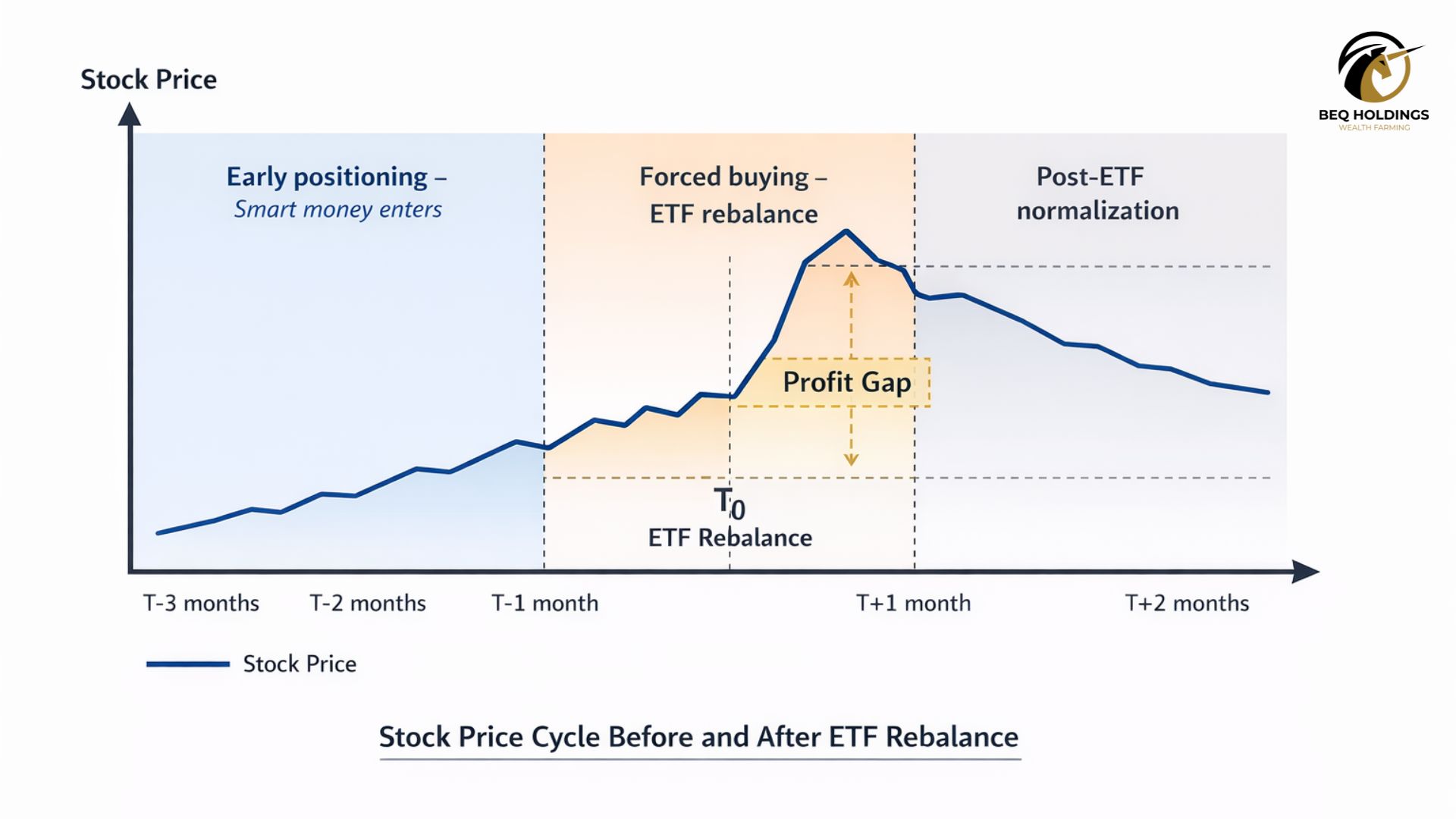
Trên thực tế, rất nhiều nhà đầu tư:
Kết quả là:
👉 Đoán đúng ETF ≠ đầu tư hiệu quả Vấn đề cốt lõi là thời điểm và cấu trúc danh mục.
Khác với cách tiếp cận chỉ tập trung vào việc ETF sẽ mua gì, BeQ Superstar Index đặt thêm một câu hỏi quan trọng hơn:
👉 Sau khi ETF hoàn tất phân bổ, cổ phiếu đó còn phù hợp để nắm giữ hay không?
Từ đó, chỉ số này không chỉ tập trung và xác suất được ETF mua mà còn đánh giá:
Theo dữ liệu tổng hợp giai đoạn 2021–2025:
Trong khi đó, các danh mục được lọc theo khả năng duy trì trong chỉ số và review định kỳ cho thấy:
Đây chính là logic vận hành cốt lõi của BeQ Superstar Index.
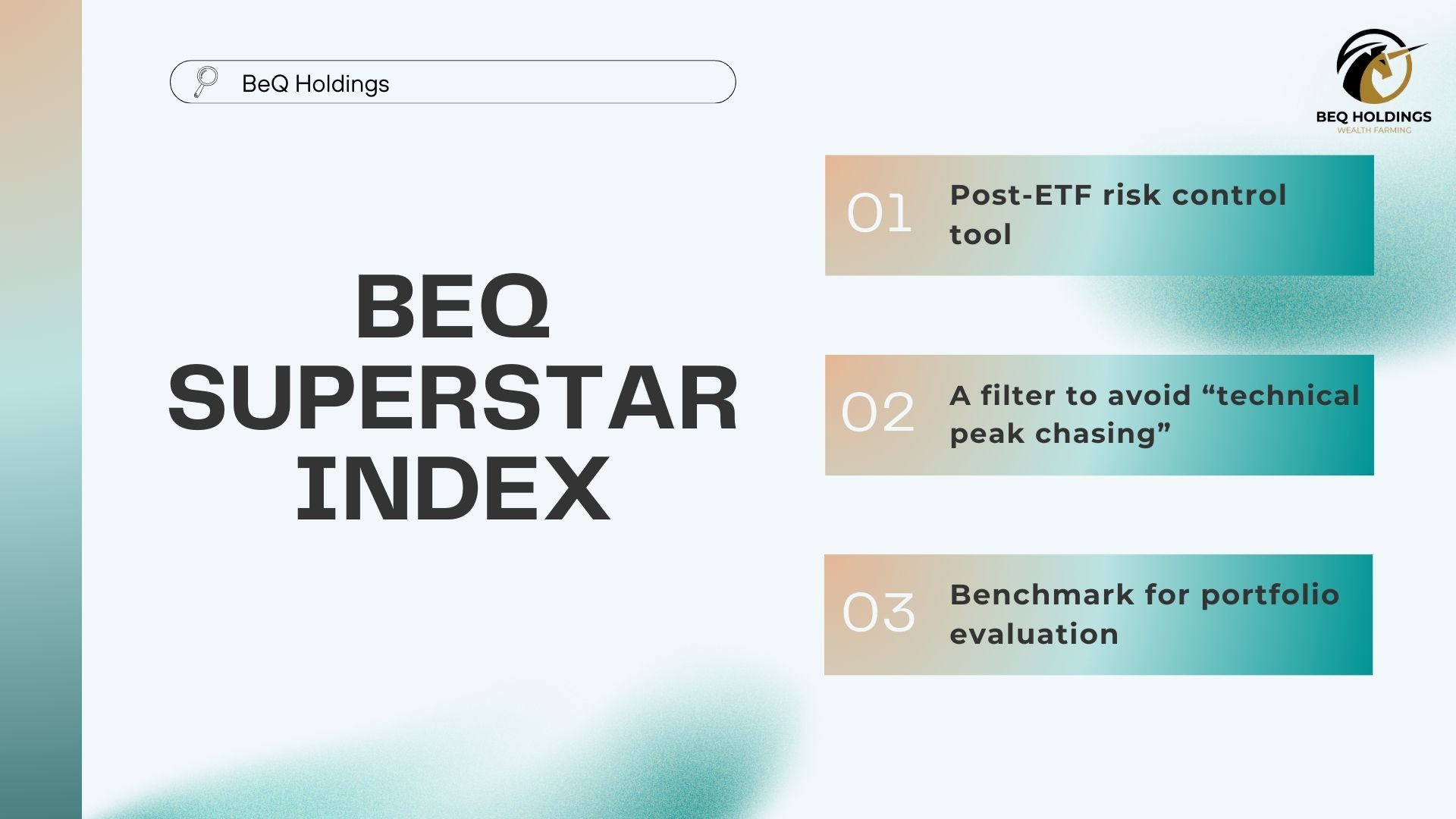
Trong thực tế, nhiều nhà đầu tư sử dụng BeQ Superstar Index như:
Thay vì hỏi:
“ETF có mua không?”
BeQ Superstar Index giúp trả lời:
“Sau khi ETF mua xong, danh mục của tôi còn hợp lý không?”
Khi Việt Nam tiến gần hơn tới:
👉 Số lượng cổ phiếu được ETF chạm tới sẽ nhiều hơn, nhưng không phải tất cả đều đáng để nắm giữ dài hạn.
Lợi thế sẽ thuộc về những nhà đầu tư:
ETF có thể mang lại lực cầu mạnh, nhưng ETF không phải là chiến lược đầu tư hoàn chỉnh.
BeQ Superstar Index không được xây dựng để:
Chỉ số này tập trung vào:
Trong kỷ nguyên đầu tư theo chỉ số, hiểu điều gì xảy ra sau ETF quan trọng không kém việc đoán ETF sẽ mua gì.
👉 Danh mục của bạn đang hưởng lợi từ dòng tiền ETF, hay đang phụ thuộc vào nó?
Khám phá cách BeQ Superstar Index giúp nhà đầu tư quản trị danh mục bền vững sau mỗi kỳ tái cấu trúc.
Liên hệ với BeQ Holdings để được tư vấn miễn phí
Text box item sample content