Trong nhiều năm, phần lớn nhà đầu tư tin rằng lợi thế nằm ở việc chọn đúng cổ phiếu – doanh nghiệp tốt hơn thị trường, tăng trưởng nhanh hơn kỳ vọng.
Nhưng khi dòng tiền ETF và các quỹ đầu tư theo chỉ số ngày càng chiếm ưu thế, cách thị trường vận hành đang thay đổi. Lợi thế không còn nằm ở việc phản ứng nhanh với thông tin, mà nằm ở việc đứng đúng vị trí trước khi dòng tiền lớn buộc phải hành động.
Đó cũng là bối cảnh BeQ Superstar Index ra đời – như một chỉ số chứng khoán được thiết kế xoay quanh cấu trúc dòng tiền bị động, thay vì chỉ phản ánh những gì thị trường đã xảy ra.
Khác với nhiều chỉ số chứng khoán truyền thống chủ yếu phản ánh vốn hóa hoặc thanh khoản tại thời điểm hiện tại, BeQ Superstar Index tập trung vào một câu hỏi cốt lõi hơn:
👉 Cổ phiếu nào có xác suất cao trở thành điểm đến của dòng tiền ETF trong tương lai?
Thay vì chờ đến các kỳ review chính thức của FTSE hay MSCI, chỉ số này định vị danh mục dựa trên:
Nói cách khác, BeQ Superstar Index không chạy theo kết quả đã xảy ra, mà tập trung vào xác suất dịch chuyển của dòng tiền – yếu tố ngày càng đóng vai trò quyết định trong thị trường hiện đại.
Chính cách tiếp cận này khiến BeQ Superstar Index thường được nhắc đến trong bối cảnh:
Sự khác biệt trong tư duy định vị dòng tiền không chỉ nằm ở lý thuyết. Dữ liệu thực tế giai đoạn 2024-2026 cho thấy hiệu suất của BeQ Superstar Index hoàn toàn tách biệt so với thị trường chung:
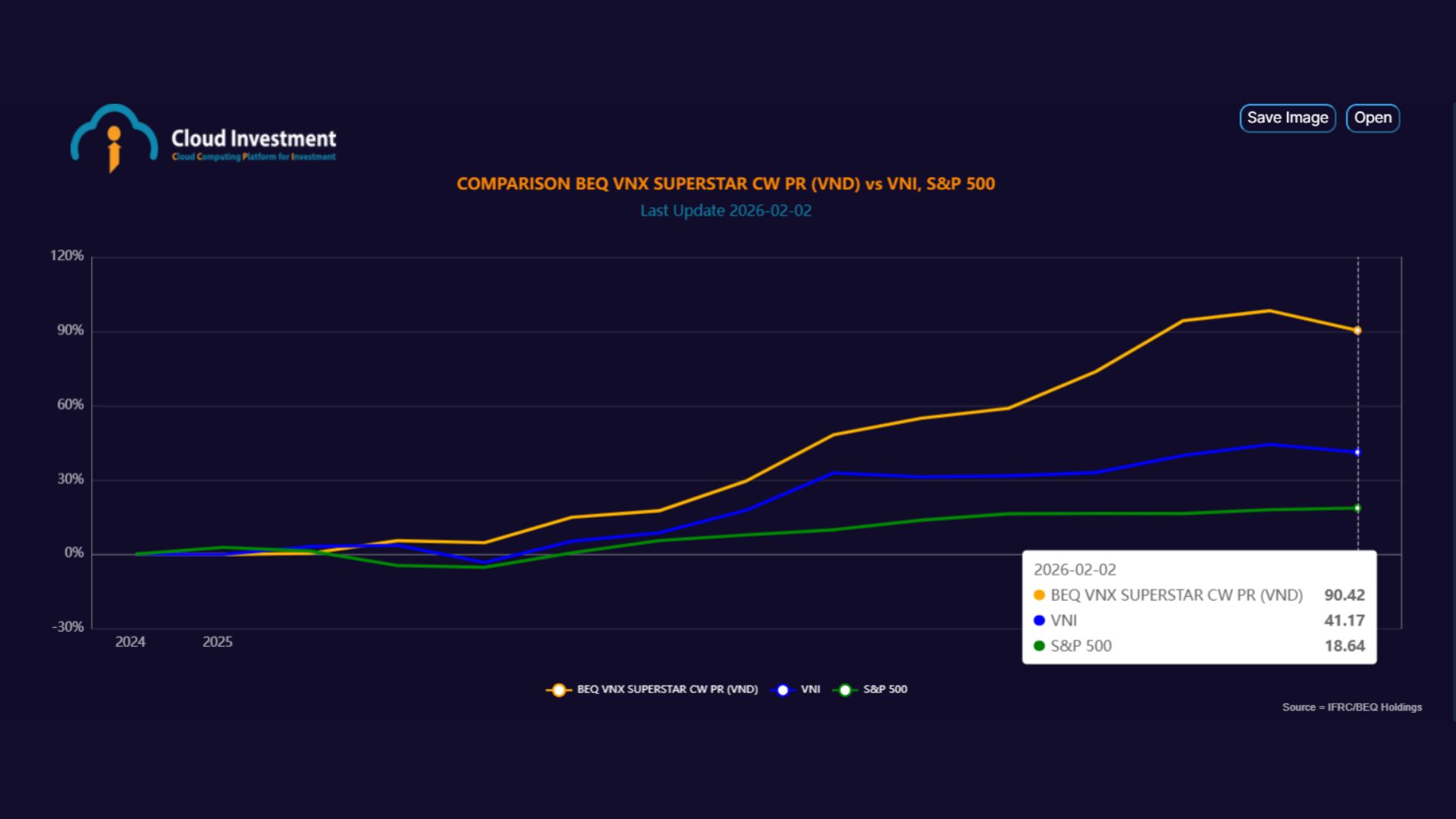
Biểu đồ cho thấy mức tăng trưởng vượt trội của BEQ VNX SUPERSTAR (90.42%) so với VNI (41.17%) và S&P 500 (18.64%) tính đến ngày 02/02/2026.
Khi tỷ trọng của các quỹ ETF tăng lên, thị trường không còn được dẫn dắt chủ yếu bởi quyết định chủ quan của từng nhà đầu tư, mà bởi các quy tắc phân bổ vốn mang tính cơ học.
Dòng tiền bị động:
Trong bối cảnh đó, những cổ phiếu đáp ứng đúng cấu trúc chỉ số sẽ trở thành điểm đến bắt buộc của dòng tiền, bất kể tâm lý thị trường ngắn hạn ra sao.
BeQ Superstar Index được xây dựng để phản ánh chính lớp logic này – nơi cấu trúc quan trọng hơn câu chuyện, và xác suất quan trọng hơn dự đoán.
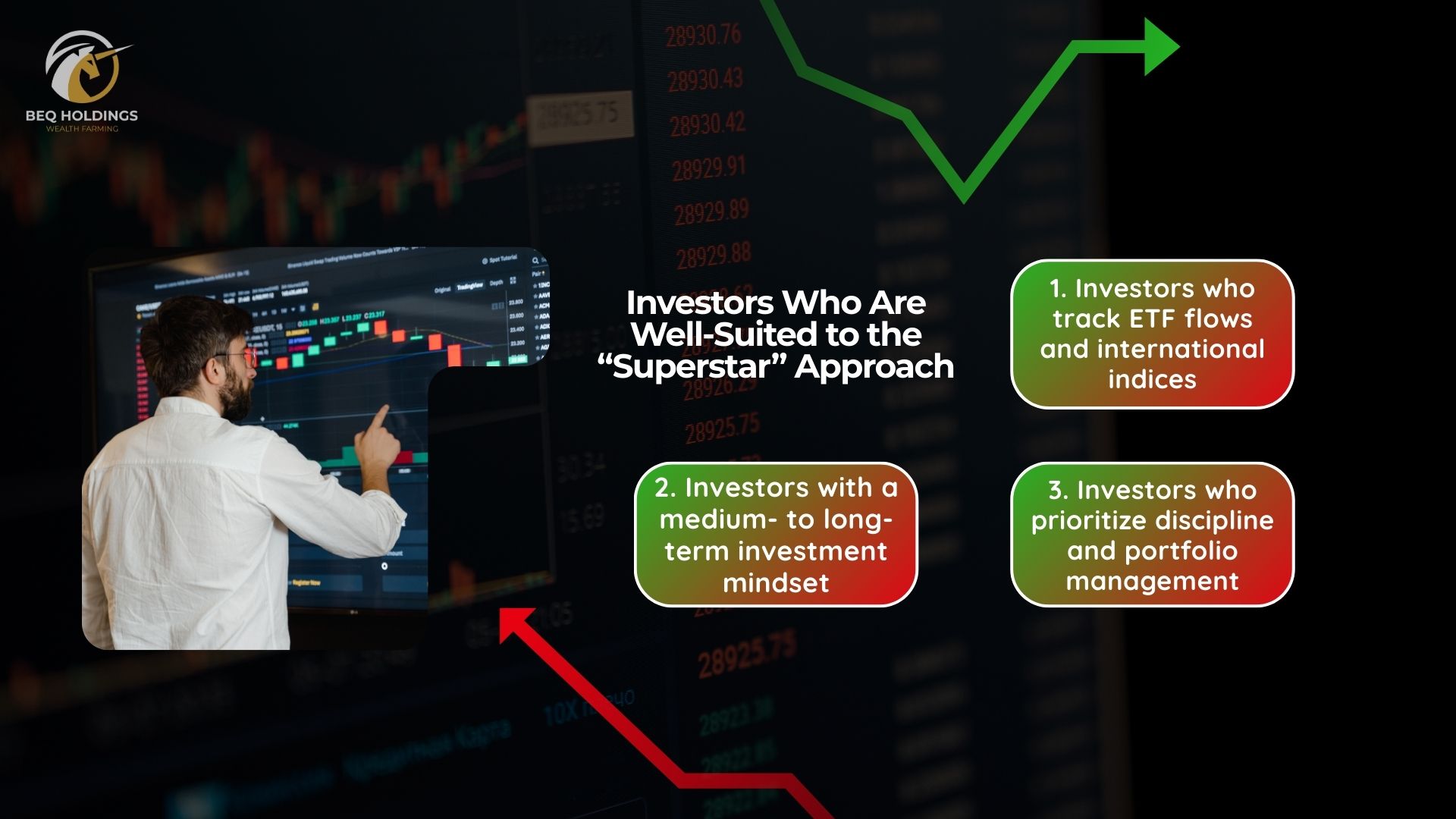
Với nhóm nhà đầu tư này, câu hỏi không còn là “cổ phiếu nào tốt?” mà là “dòng tiền lớn sẽ buộc phải mua cổ phiếu nào?”.
BeQ Superstar Index phù hợp với những người:
Một ví dụ điển hình là cổ phiếu FPT đầu năm 2024. Khi các tiêu chí định lượng đạt ngưỡng, chỉ số đã định vị cổ phiếu này từ giai đoạn tích lũy, trước khi các đợt mua ròng mạnh từ ETF góp phần đẩy giá tăng đáng kể sau đó.
BeQ Superstar Index không được thiết kế cho biến động ngắn hạn.
Cách tiếp cận này phù hợp với nhà đầu tư:
Trong bối cảnh Việt Nam tiến gần hơn tới các tiêu chuẩn nâng hạng, lợi thế không nằm ở phản ứng nhanh, mà nằm ở việc nắm giữ đúng vị thế trong suốt quá trình dịch chuyển của dòng tiền.
Một điểm khác biệt quan trọng của BeQ Superstar Index là khả năng giảm thiểu quyết định cảm xúc.
Danh mục được xây dựng và tái cơ cấu dựa trên quy tắc, thay vì cảm giác thị trường.
Với những nhà đầu tư coi trọng:
BeQ Superstar Index đóng vai trò như một khung vận hành, không chỉ là một ý tưởng đầu tư đơn lẻ.
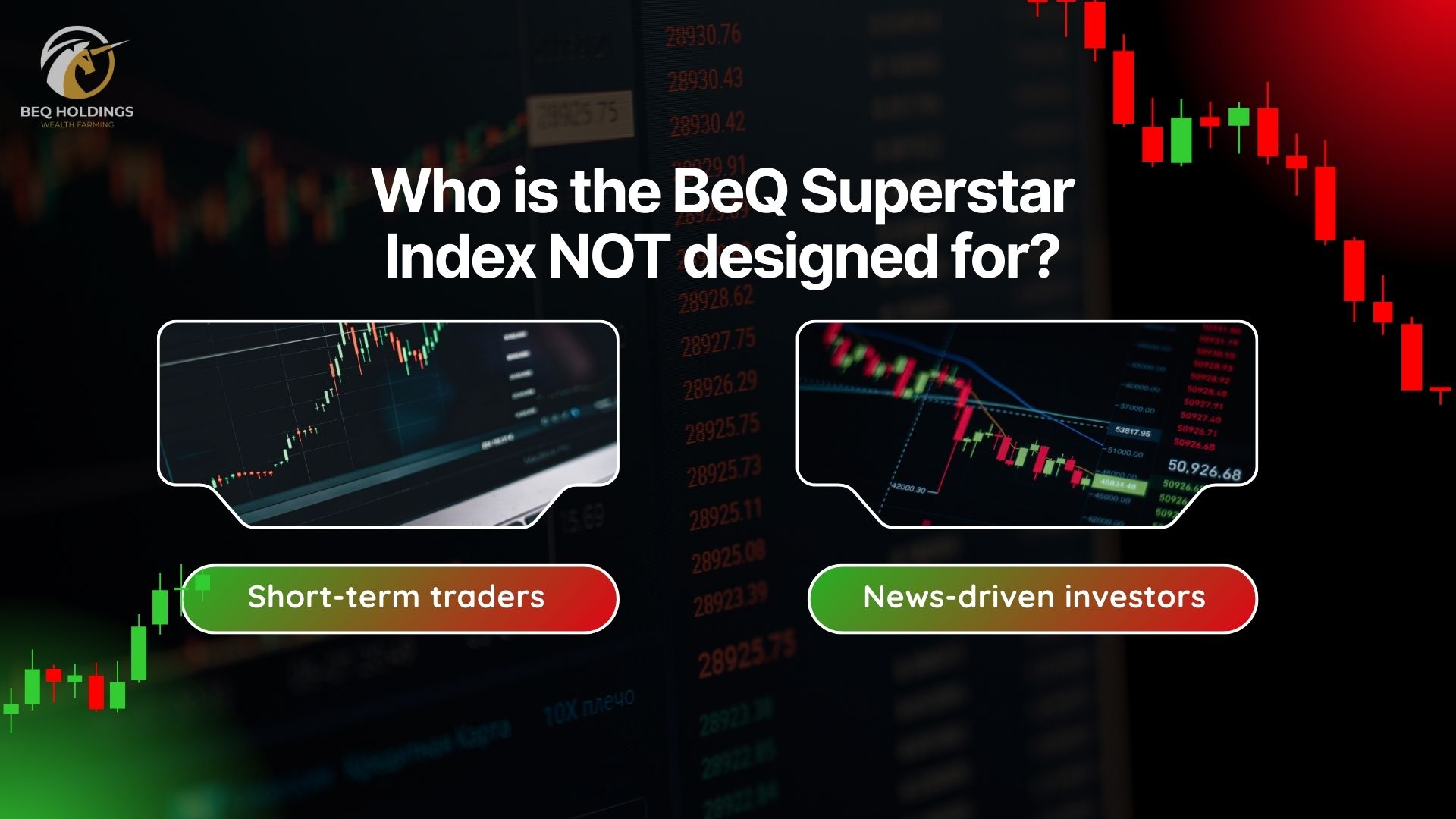
Không phù hợp với nhà đầu tư lướt sóng
Nếu mục tiêu của bạn là giao dịch ngắn hạn, tối ưu từng nhịp T+ hay phản ứng theo tin nóng, thì đầu tư theo chỉ số – đặc biệt là BeQ Superstar Index – không phải lựa chọn phù hợp.
Chỉ số không mang lại cảm giác “hành động liên tục”, nhưng đổi lại là sự nhất quán trong cấu trúc danh mục.
Không phù hợp với nhà đầu tư dựa vào tin tức
BeQ Superstar Index được xây dựng dựa trên tiêu chuẩn, xác suất và cấu trúc dòng tiền, chứ không dựa vào tin đồn hay kỳ vọng ngắn hạn.
Vì vậy, những nhà đầu tư quen giao dịch theo thông tin tức thời sẽ khó đồng hành lâu dài với cách tiếp cận này.
Trong thực tế, BeQ Superstar Index được sử dụng như:
Chỉ số này giúp nhà đầu tư trả lời một câu hỏi quan trọng:
Danh mục của tôi đang đứng ở đâu trong bức tranh dòng tiền toàn thị trường?
Đây là vai trò mà các chỉ số truyền thống, vốn chỉ phản ánh trạng thái hiện tại, thường khó đảm nhiệm đầy đủ.
|
Tiêu chí |
Phù hợp |
Không phù hợp |
|
Tư duy đầu tư |
Trung – dài hạn |
Ngắn hạn |
|
Trọng tâm |
Dòng tiền ETF |
Biến động giá |
|
Phương pháp |
Đầu tư theo chỉ số |
Giao dịch chủ động |
|
Yếu tố quyết định |
Cấu trúc |
Tin tức |
BeQ Superstar Index không phải là giải pháp đầu tư cho tất cả mọi người.
Nhưng với những nhà đầu tư:
đây là một lựa chọn chiến lược đáng để nghiên cứu nghiêm túc.
Liên hệ với BeQ Holdings để được tư vấn miễn phí
Text box item sample content