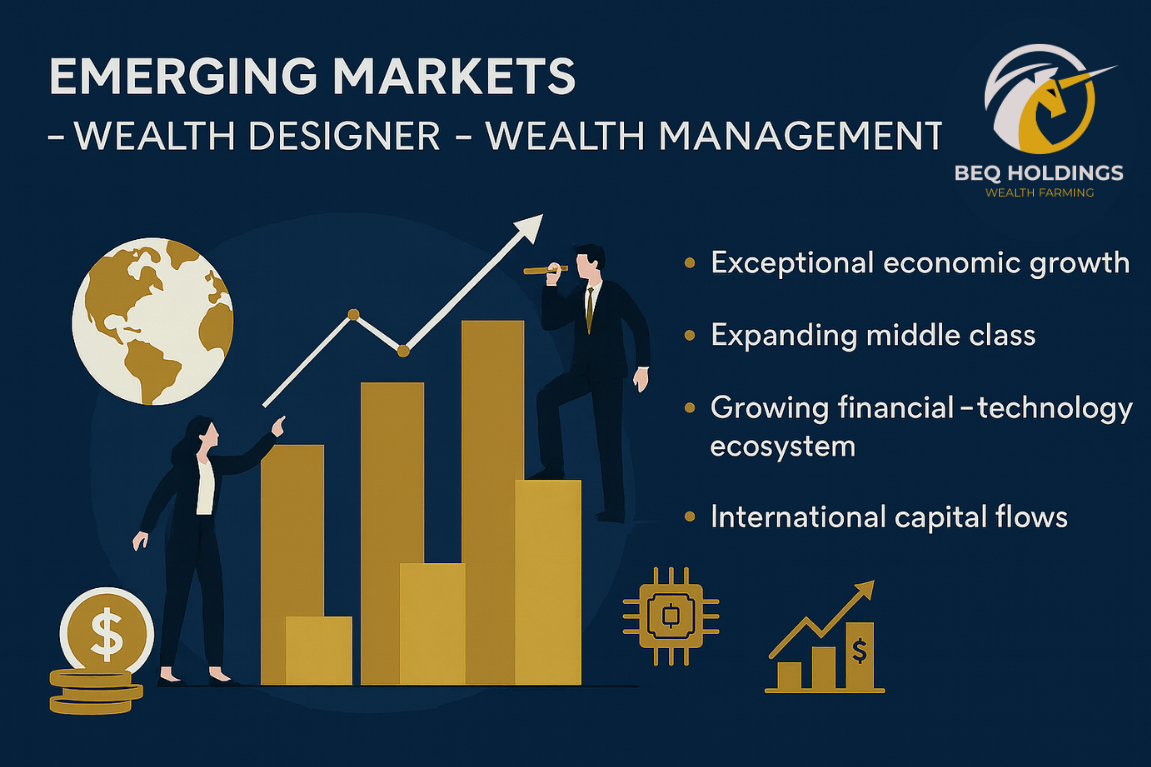
As the global economy undergoes major shifts, emerging markets are becoming the center of capital flows and investment opportunities. Along with the rapid expansion of income and assets among the middle and affluent classes, the demand for professional wealth management services is increasing significantly..
This is also why the profession “Wealth Designer” — experts in designing and planning long-term wealth strategies — has become one of the most in-demand roles in fast-growing markets such as Vietnam.
BeQ Holdings, a pioneer in WealthTech and the Wealth Designer & Wealth Management model, accompanies investors in emerging markets to build sustainable, intelligent, and future-driven financial strategies.
According to global financial institutions such as Investopedia, Oxford EMS, and ScienceDirect, emerging markets are fast-growing economies with high urbanization rates, expanding middle classes, and increasingly improved investment environments.
Vietnam, together with Indonesia, the Philippines, and India, is among the fastest-growing emerging markets in Asia. In these markets, the demand for wealth management, financial planning, and long-term asset preservation is expanding faster than ever before.
Based on insights from VNSC, Investopedia, Techcombank, and SAPP, Wealth Management is not merely investment management — it is a holistic financial solution designed for individuals and families with substantial assets, encompassing the following:
2.1. Core Services in Wealth Management
Investment Management
The global asset management market reached USD 124.7 trillion in 2024, with an annual growth rate of 7–8% (BCG Global Asset Management Report 2024). Meanwhile, global HNWI wealth rose to USD 86 trillion, increasing 4.7% despite economic volatility (Capgemini WWR 2024).
→ This indicates a rising demand for professional asset management, especially in emerging markets where wealth accumulation is occurring faster than the global average.
Long-Term Financial Planning
76% of investors in the Asia–Pacific region report lacking a long-term financial roadmap and express a need for more professional advisory (Deloitte APAC Wealth Management 2023). 68% of HNWIs in emerging markets believe that “10–20 year financial strategy” is more important than selecting investment products (Capgemini).
Tax Optimization & Asset Structuring
HNWI wealth in Asia has grown 134% over the past decade, driving strong demand for asset structuring, tax optimization, and wealth protection (Knight Frank Wealth Report 2024). 52% of HNWIs in emerging markets now prioritize “tax optimization” in their financial planning — up from 37% five years ago.
Insurance Solutions & Asset Protection
According to Techcombank Wealth 2024, 71% of affluent clients in Vietnam prioritize health insurance, income protection, and asset-protection products to safeguard wealth amid market fluctuations. This is a core element of Wealth Management, especially in emerging markets where economic volatility poses significant risks to family assets.
Legacy & Estate Planning
35% of wealthy families in Asia are currently in the process of transferring assets to the second generation, making it the fastest-growing region for intergenerational wealth transfer (UBS Family Wealth Report 2024). 65% of HNWIs seek structured support in establishing family trusts/funds.
Risk Management & Capital Preservation
Emerging markets exhibit volatility levels 1.5–2 times higher than developed markets (MSCI Emerging Markets Volatility Index). Therefore, risk management — including multi-asset diversification and real-time risk controls — has become the “backbone” of modern Wealth Management.
2.2. Key Benefits
Reduced Risk & Sustainable Return Optimization
Professionally managed portfolios reduce drawdowns by 25–40% compared to self-managed portfolios (BlackRock Risk Advisory 2024). Investors with structured wealth strategies typically achieve stable annual growth of 6–10% (Capgemini WWR).
Asset Growth Aligned With Personal/Family Goals
74% of investors in Asia pursue dual goals: accumulation + preservation. Wealth Management helps balance both, instead of chasing short-term returns.
A Clear 10–20 Year Financial Roadmap
63% of HNWIs state that a “long-term financial plan” is the most important factor for sustaining multi-generational wealth (Credit Suisse Global Wealth Report).
Asset Protection During Economic Volatility
From 2022–2024, a period of global uncertainty, professionally managed portfolios recorded 30–45% lower volatility compared to self-directed portfolios.
Separation of Personal & Business Finances
8% of Vietnamese business owners surveyed by Techcombank Wealth admitted to mixing personal and business assets — a practice that leads to tax, legal, and succession risks. Wealth Management ensures clear separation and optimal ownership structuring.
In emerging markets, the role of Wealth Management becomes even more critical, as rapid wealth creation is accompanied by higher market risk.

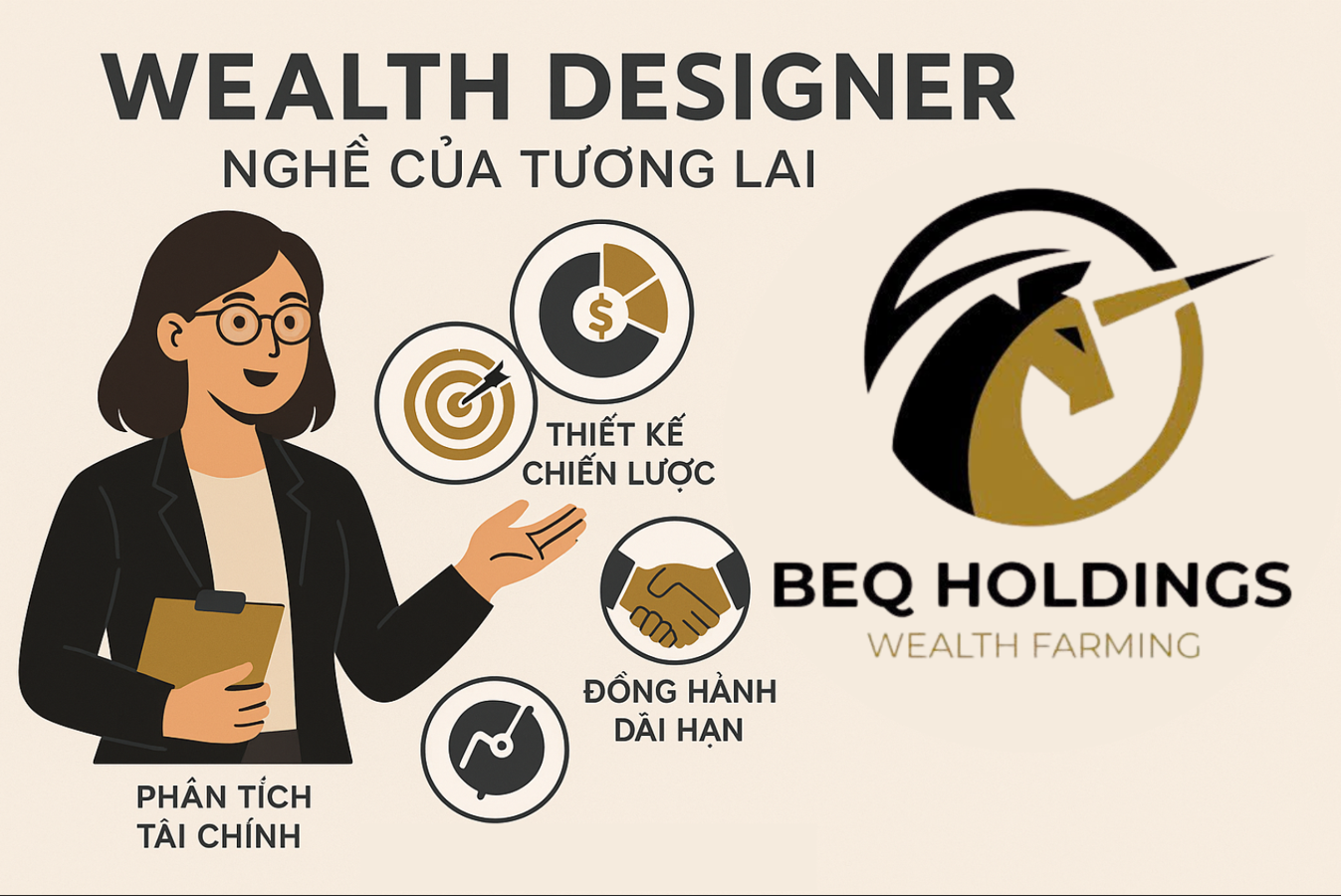
If Wealth Management is considered the engine that operates and protects assets, then a Wealth Designer is the strategic architect — the one who designs the overall “financial blueprint” to help clients stay on the right path, sustainably and safely, throughout their long-term financial journey.
3.1. Who is a Wealth Designer?
A Wealth Designer is not just a financial advisor. They are a strategic wealth architect who possesses three core competencies:
Multilayer knowledge of finance, investment, and asset management: Understanding everything from equities, bonds, real estate, and insurance to new asset classes such as crypto, digital assets, and business ownership.
The ability to analyze financial behavior and client risk profiles: Beyond looking at numbers, they can read clients’ spending habits, future needs, and financial motivations.
The ability to design deeply personalized wealth strategies: An effective strategy must be “tailor-made” to each client’s life goals..
3.2. Roles of a Wealth Designer
Why is the Wealth Designer profession becoming a major trend in Vietnam and other emerging markets?
1. The rapid rise of the new wealthy class
Vietnam is among the countries with the fastest-growing number of HNWIs in Asia. As wealth increases, so does the demand for specialized and professional advisory services.
2. Clients lack the time to manage their own assets
Many successful individuals are excellent at generating income but lack the time or expertise to optimize their wealth.
3. Asset portfolios are becoming more complex
Stocks, real estate, bonds, insurance, crypto, businesses, digital assets… A single mistake can erase years of hard-earned gains.
4. The strong development of WealthTech
At BeQ, platforms such as:
LUMIR – financial analysis & investor profiling
CCPI –multi-asset algorithm & intelligent risk management have paved the way for a new generation of Wealth Designers to operate more efficiently than ever before.
5. The Rising Trend of “Seeking Personal Financial Planning Experts”
Vietnamese investors increasingly value:
Independent advisory
Personalized strategies
Long-term solutions instead of short-term products
Therefore, the role of the Wealth Designer is becoming an essential profession in the modern financial economy.
4.1. Global WealthTech Landscape — The Context for BeQ
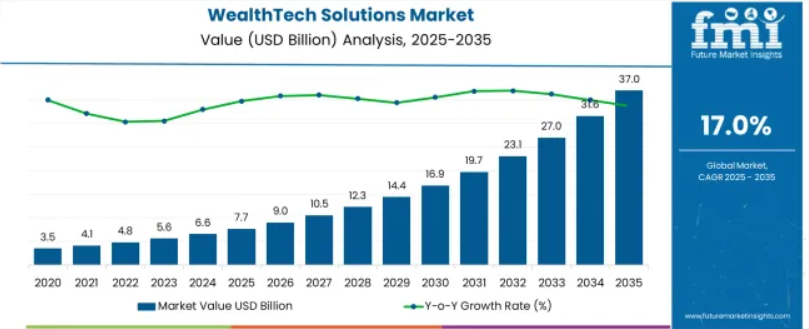
The global WealthTech solutions market is estimated to reach USD 7.7 billion in 2025, and is projected to surge to USD 37.0 billion by 2035 (CAGR ~17% per year).
Another report shows the “Wealth Tech Solution” market reaching USD 16.48 billion by 2032 with a CAGR of ~13.9%.
In 2024, global WealthTech revenue recorded significant growth, reflecting the shift of financial institutions, banks, and investment funds from traditional/manual models to digital, automated, and data-driven systems.
This is clear evidence that WealthTech is no longer the future—it is the present, and even major asset management organizations are adopting technology to increase efficiency, reduce costs, and scale their client base.
→ This creates a real runway for companies like BeQ Holdings, which positions itself at the intersection of technology – data – wealth management.
4.2. BeQ’s Role: “WealthTech Ecosystem – Wealth Designer – Data & Technology”
BeQ Holdings, with a long-term vision, is building a modern, specialized wealth management ecosystem that leverages emerging trends in WealthTech and digital wealth management, including:
Standardizing client financial data: aggregating information from multiple sources—assets, portfolios, income, cash flow, risks, taxes, insurance to form a complete financial picture. This aligns with the rising demand among affluent clients for a holistic financial map.
AI / Big Data–driven behavior & financial-goal analysis: as AI/ML becomes a standard in WealthTech, using personal data + algorithms to design tailored strategies (risk tolerance, long-term objectives, retirement age, children’s education…) enables deeper personalization and better outcomes. This mirrors the direction taken by global robo-advisors and digital advisory platforms.
Automation & portfolio design using internal frameworks (CCPI): backed by its data and technology infrastructure, BeQ can develop standardized models to build optimal portfolios for different client profiles—from high-net-worth individuals to mass affluent and early-stage accumulators.
Transparency, risk control & long-term planning:data-driven systems support risk forecasting, stress-testing, and rebalancing—capabilities often missing in manual/traditional setups. In emerging markets where volatility is high, this becomes a significant advantage.
→ As a result, BeQ does not just “meet traditional wealth management needs” but emerges as a pioneer shaping the model of Wealth Design – Technology – Advanced Asset Management.
4.3. Why This Timing Is Extremely Favorable for BeQ
With global WealthTech growing at CAGR 13.9% – 17%, the demand for digital wealth management platforms and services is set to accelerate.
In emerging markets like Vietnam—with rapidly expanding affluent and mass-affluent segments—the need for portfolio management, wealth preservation, long-term investing, and risk control is rising across the board, not only among the ultra-rich but also among middle-income individuals with accumulated assets.
Advances in AI, data, cloud, and analytics reduce costs and enable broader client coverage. WealthTech and Wealth Designer models are no longer limited to the wealthy—they can now scale to clients with smaller asset bases.
Global trends show younger generations (Millennials and Gen Z) prefer digital, transparent, and convenient services. They form the ideal client segment for BeQ. According to industry reports, many WealthTech platforms are growing rapidly thanks to investors under 40 who prefer digital investment tools.
Over the past decade, emerging markets have become the growth engines of the global economy. According to the IMF and World Bank, Emerging Markets now contribute more than 60% of global GDP growth and are projected to lead the world economy from 2025–2035.
Vietnam, alongside Indonesia, the Philippines, and India ranks among Asia’s fastest growing economies, with:
This is the golden era for developing smarter investors and a new generation of financial professionals especially in Wealth Management.
BeQ Holdings – A Pioneer Shaping the Next Generation of Wealth Management Experts
Within the rapid rise of emerging markets, BeQ Holdings stands at the forefront of WealthTech, offering an integrated ecosystem that includes:
BeQ does more than provide tools.
BeQ sets a new benchmark for the Wealth Management industry in Vietnam, elevating the Wealth Designer profession into a strategic, trustworthy, and sustainable career path.
If you are an investor seeking smarter financial strategies, or someone aspiring to become a professional Wealth Designer, BeQ Holdings is ready to accompany your journey.
Register for a free consultation today to build a strong financial foundation and accelerate your growth in the decade ahead.
Text box item sample content