In investing, “safety” is often misunderstood.
For retail investors, safety may mean:
Nhưng với vốn lớn, đặc biệt là vốn tổ chức, “an toàn” mang một ý nghĩa hoàn toàn khác.
Với quỹ đầu tư, family office hay dòng tiền tổ chức, rủi ro lớn nhất không nằm ở giá lên hay xuống trong ngắn hạn.
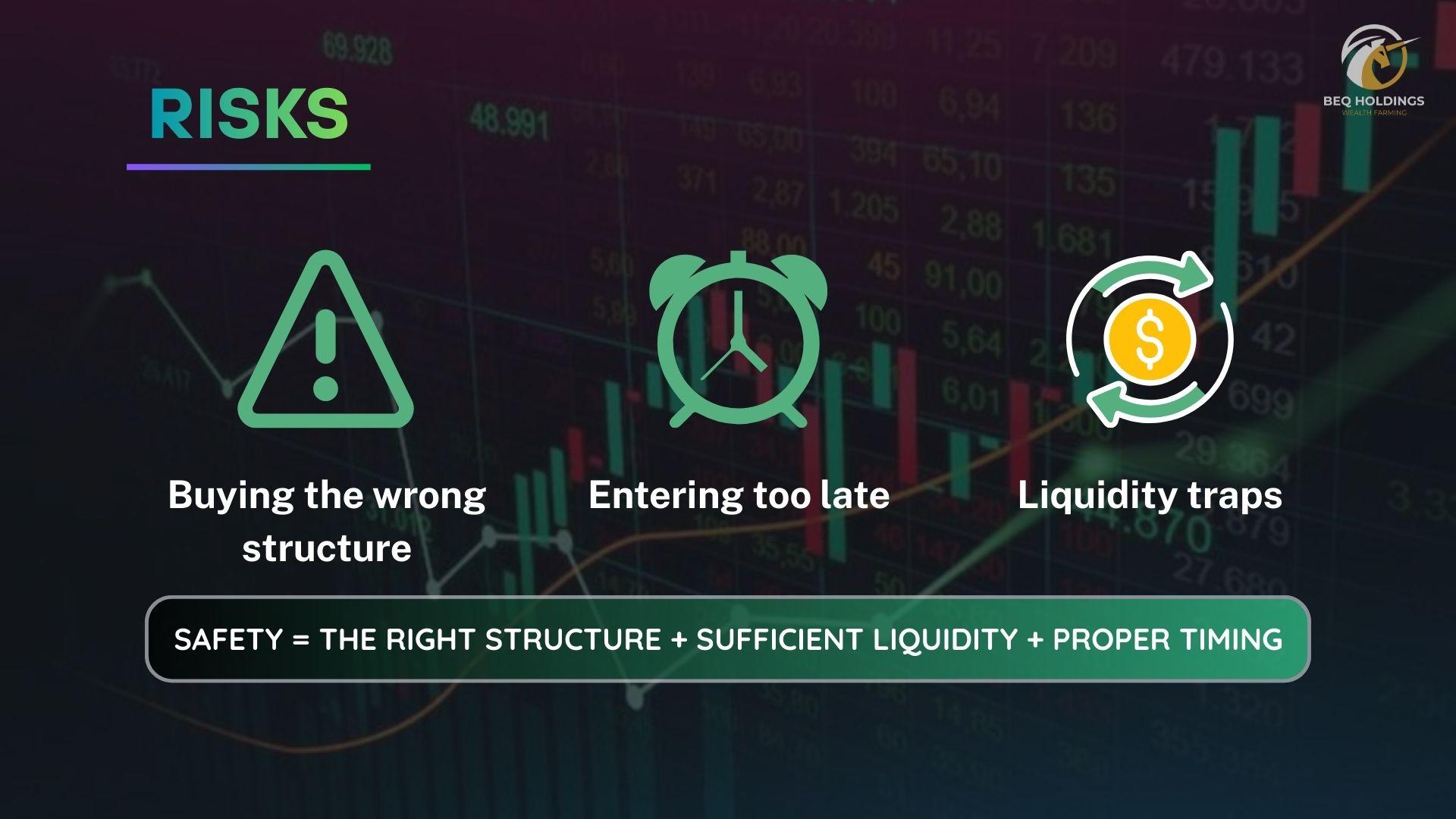
Rủi ro lớn nhất nằm ở 3 điểm:
Nói cách khác, an toàn = cấu trúc đúng + thanh khoản đủ + thời điểm hợp lý.
Trong bối cảnh dòng tiền toàn cầu ngày càng dịch chuyển theo chỉ số và ETF, “an toàn” không còn là câu chuyện chọn cổ phiếu tốt, mà là đứng đúng phía của dòng tiền bị động.
Khi thị trường tiến tới cột mốc nâng hạng, rủi ro lớn nhất của vốn tổ chức không nằm ở biến động giá, mà nằm ở lỗ hổng chiến lược trong cách tiếp cận dòng tiền.
Dòng tiền ETF không mua theo "câu chuyện hay", họ mua theo thuật toán.
Sai lầm: Đầu tư dựa trên kỳ vọng cơ bản nhưng bỏ qua các bộ lọc kỹ thuật của FTSE. investing based on fundamental expectations while ignoring FTSE’s technical inclusion filters.
Hệ quả: Nắm giữ cổ phiếu tốt nhưng nằm ngoài "đường đi" của dòng vốn tỷ USD. holding fundamentally strong stocks that lie outside the path of multi-billion-dollar capital flows.
The risk: a structural allocation error that cannot be corrected through trading.
Quy luật tất yếu: Dòng tiền thông minh định vị trước, dòng tiền ETF bắt buộc mua sau.
Khi FTSE công bố chính thức
Vào lệnh muộn đồng nghĩa với:
Đây là một sự đánh đổi mà các nguồn vốn định chế không chấp nhận.
Với vốn lớn, rủi ro đáng sợ nhất không phải lỗ, mà là không thể thoát vị thế.
Hệ quả: Vốn lớn tự "khóa" mình trong một vị thế không có thanh khoản đầu ra.
Góc nhìn BeQ: An toàn thực sự là đảm bảo danh mục luôn nằm trong "Vùng giao thoa" giữa tiêu chuẩn chỉ số toàn cầu và tính thanh khoản thực tế của thị trường.
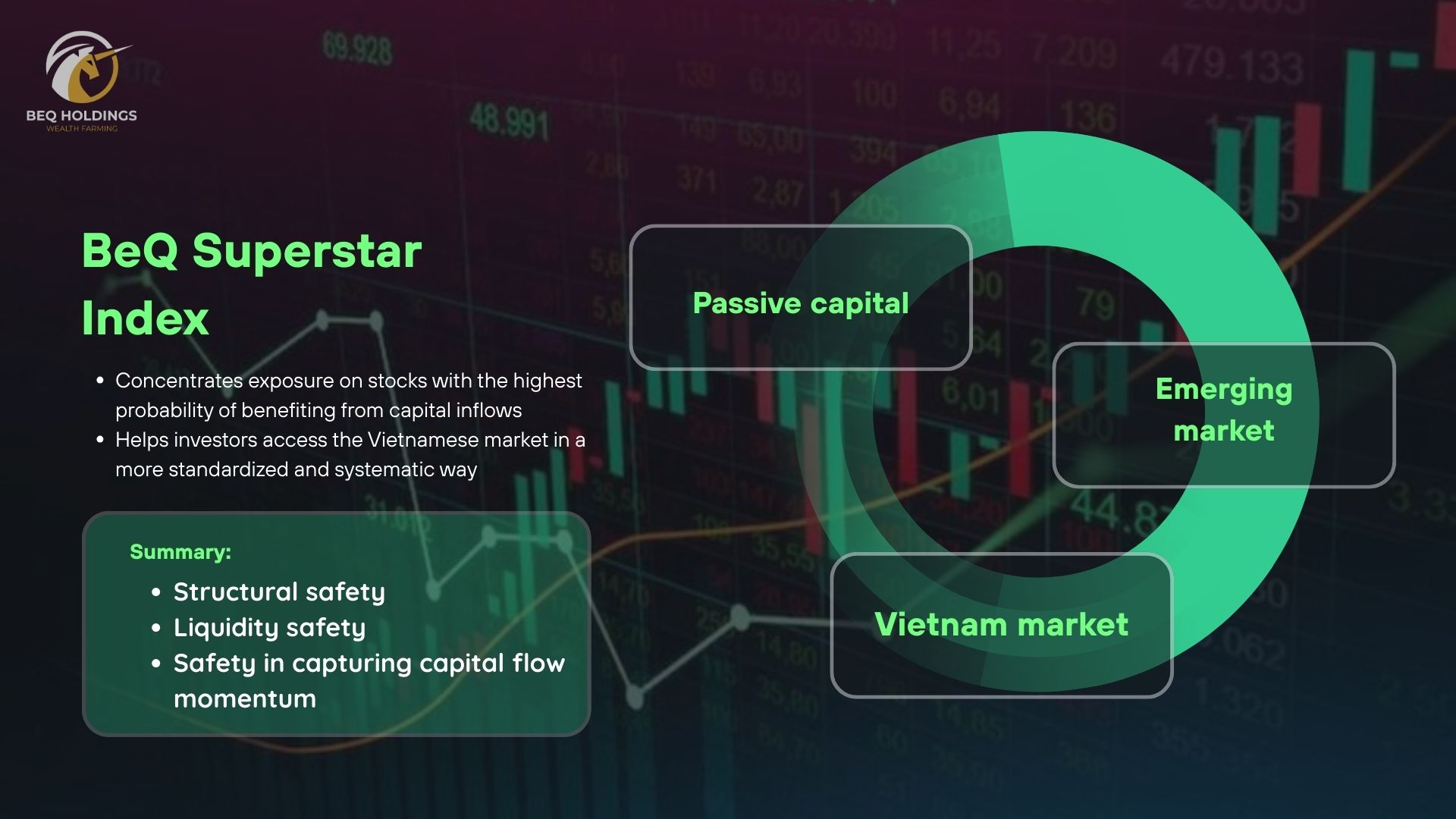
BeQ Superstar Index không được thiết kế để:
Nó được thiết kế để giải quyết ba rủi ro trên bằng cấu trúc chỉ số.
Cách tiếp cận cốt lõi:
Rather than asking:
“Is this a good company?”
BeQ Superstar Index hỏi: “Dòng tiền chỉ số có buộc phải mua cổ phiếu này không?”
Đây là sự khác biệt mang tính nền tảng.
Một điểm rất quan trọng trong thiết kế của BeQ Superstar Index là review hàng tháng trong giai đoạn trước FTSE EM effective.
Điều này mang lại 3 lợi thế lớn:
Thay vì dồn rủi ro vào một lần mua hay một sự kiện duy nhất, monthly review cho phép điều chỉnh dần theo xác suất, phân bổ rủi ro theo thời gian và tránh “all-in” vào một kịch bản.
Với vốn lớn, đây là cách quản trị rủi ro chuẩn mực.
Tiêu chuẩn FTSE không bất biến:
Review hàng tháng giúp chỉ số:
Với ETF hoặc structured products, monthly review giúp:
Đây là lý do vì sao Superstar Index được thiết kế để “đầu tư được”, không chỉ để xem.
|
Tiêu chí |
VN30 / VN-Index |
BeQ Superstar Index |
|
Mục tiêu |
Đo lường hiệu suất quá khứ |
Định vị dòng tiền tương lai |
|
Cơ chế lọc |
Vốn hóa & Thanh khoản thuần túy |
Tiêu chuẩn FTSE/MSCI + Room + Free-float |
|
Chu kỳ Review |
6 tháng (Độ trễ cao) |
Hàng tháng (Monthly Rebalancing) |
|
Vốn tổ chức |
Bị động theo thị trường |
Chủ động định vị trước ETF |
VNIndex và VN30 được thiết kế với mục tiêu chính là đo lường diễn biến của thị trường chứng khoán Việt Nam. Chúng phản ánh những gì đã xảy ra, với chu kỳ cập nhật dài và ít tập trung vào xác suất dòng tiền trong tương lai.
Ngược lại, BeQ Superstar Index được xây dựng để phục vụ bài toán định vị dòng tiền ETF và vốn tổ chức trong giai đoạn thị trường tái cấu trúc.
Sự khác biệt này không nằm ở việc chỉ số nào “tốt hơn”, mà nằm ở mục tiêu sử dụng hoàn toàn khác nhau.
Dòng tiền ETF:
Superstar Index is designed to align with this logic, not oppose it.
Nâng hạng không phải là “tin tốt”, mà là một quá trình tái cấu trúc dòng tiền kéo dài nhiều năm.
Ai:
→ sẽ có lợi thế.
Việt Nam:
Nhưng không phải cổ phiếu nào cũng hưởng lợi như nhau.
BeQ Superstar Index giúp:
BeQ Superstar Index không được thiết kế để hứa hẹn lợi nhuận ngắn hạn hay loại bỏ mọi biến động của thị trường.
Chỉ số này tập trung vào một khái niệm “an toàn” khác:
BeQ Superstar Index không chỉ là một chỉ số; đó là bản đồ định vị dòng vốn trong kỷ nguyên nâng hạng. Chúng tôi mang lại sự an toàn về cấu trúc để nhà đầu tư tự tin giải ngân quy mô lớn.
Liên hệ với BeQ Holdings để được tư vấn miễn phí
Text box item sample content